It is often thought that a healthy body is a good-looking body, but in reality, that’s not all that is important. Your heart and muscles need to be well cared for, and so does your overall health. The Body Mass Index (BMI) is one of the simplest tools that is used to check your health. Tracking your BMI helps determine your weight range, identify health problems to watch for, and monitor your health progression.
With one of the many Easy Body Mass Index Converter tools available, BMI checks and health monitoring have gotten even easier. You won’t need to carry out any complicated math, and you will be able to cover your health progression on a consistent basis. The purpose of this article is to break down the world of BMI: what it is, how important it is, what it is used to calculate, and how you can use the BMI health tracking tool.
What is Body Mass Index (BMI)?
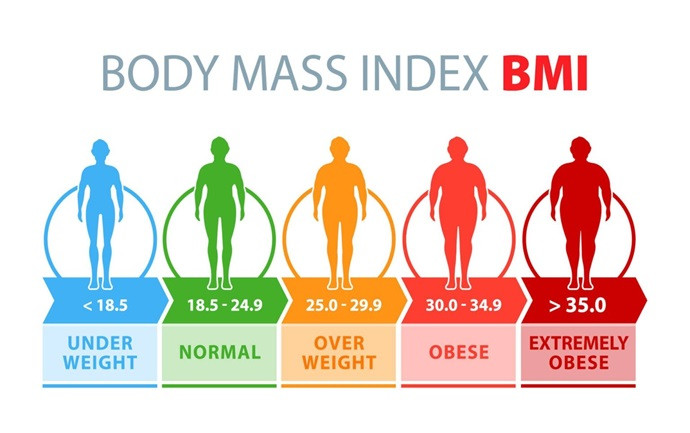
Body Mass Index (BMI) is a value that relates to a person’s height and weight. It is a mechanism for diagnosing whether a person is underweight, normal, overweight, or obese. Healthcare professionals frequently use BMI as a quick, easy, and non-invasive measure to assess a person’s health condition related to weight.
How BMI Works
BMI does not measure body fat. Rather, it is an assessment of height against weight. This provides a uniform measure to be used against different people. While it may not provide the best measure against highly muscled people, it is still a useful and valuable measure to track general health.
The Importance of Body Mass Index Monitoring
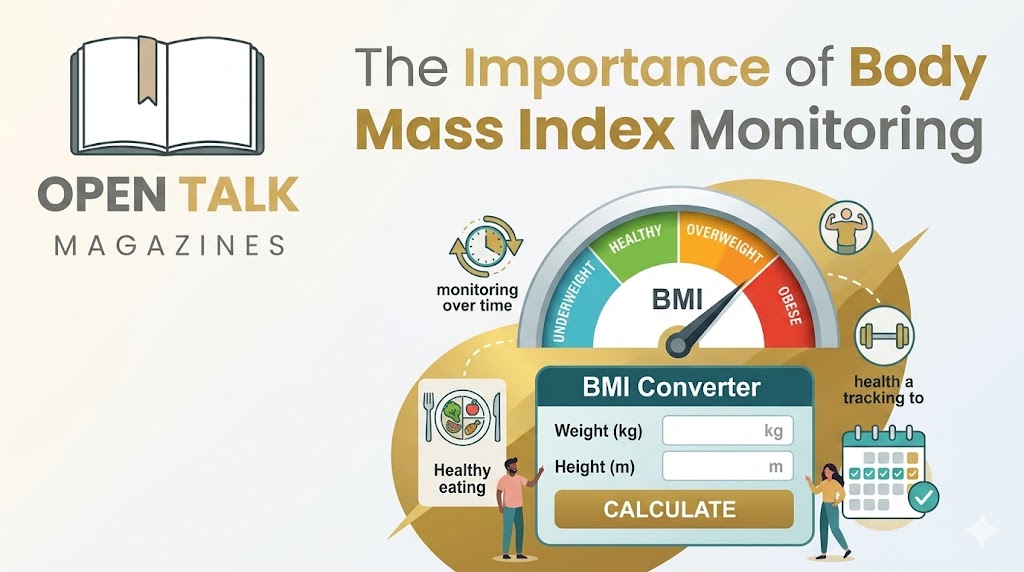
Keeping track of your Body Mass Index (BMI) is a critical part of health management. Here’s why:
Proactive Health Monitoring: High BMI indicates a likelihood of particular heart conditions, certain cancers, and diabetes. A low BMI can highlight malnourishment. Both need intervention.
Assisted Weight Control: BMI is a measurement that can indicate the effectiveness of your eating and exercise habits.
Longevity of Health Monitoring: Consistent BMI shows a pattern over time and motivates the endurance of a healthy lifestyle.
Through the Easy Body Mass Index Converter, you will receive results in a matter of seconds. This encourages taking your health seriously and is a positive change to your routine.
Formula to Determine BMI
BMI is determined using the following calculation:
BMI = Weight (kg) Height (m)²
Alternatively, you can use the imperial measurement version.
BMI = Weight (lbs) × 703 / Height (in)²
Sample Calculation
Weight: 70 kg
Height: 1.75 m
BMI=701.752=703.0625≈22.9
Because 22.9 is within the normal weight range, the result is clinically acceptable.
Simple Steps to Use an Online BMI Converter
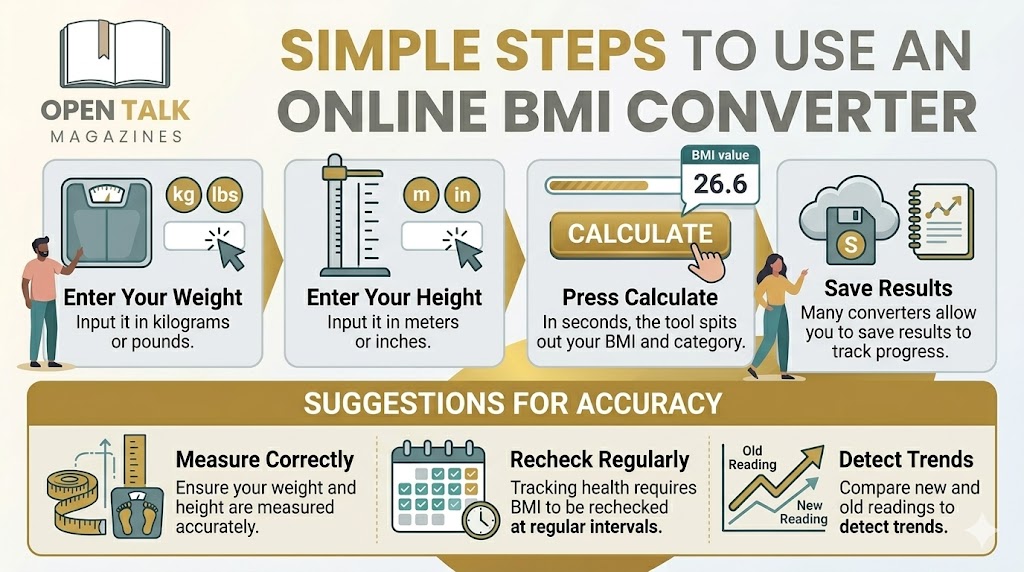
Online body mass index converter are simple to use. Just follow these steps:
- Enter Your Weight: Input it in kilograms or pounds.
- Enter Your Height: Input it in meters or inches.
- Press Calculate: In seconds, the tool spits out your BMI and category.
- Save Results: Many converters allow you to save results to track progress later.
Suggestions for Accuracy
- Measure your weight and height correctly.
- Tracking health requires BMI to be rechecked at regular intervals.
- Detect trends with comparisons of new and old readings.
Benefits of BMI Converter for Health Tracking
- Convenience: Eliminates the need for calculations.
- Precision: Minimizes errors made using the formula.
- Efficiency: Results are provided at a health check.
- Realistic: Enables the setting of tangible goals for weight and fitness.
- Promote Habits: Noting your progress maintains your goal-directed actions.
An easy body mass index converter is on hand to streamline your journey to health that is within your control.
Understanding BMI Classifications
The following explains the categories of BMI:
- Underweight: A BMI under 18.5 can indicate malnourishment. This may also indicate other health conditions.
- Normal: A BMI between 18.5 and 24. 9. Considered normal for most.
- Overweight: A BMI between 25 and 29.9. More prone to health risks.
- Obese: A BMI of 30 or greater. A wide assortment of health conditions becomes more probable.
Recognition of the categories can help you identify necessary changes in your diet, exercise, and general lifestyle.
Limitations of BMI and When to Consult a Professional
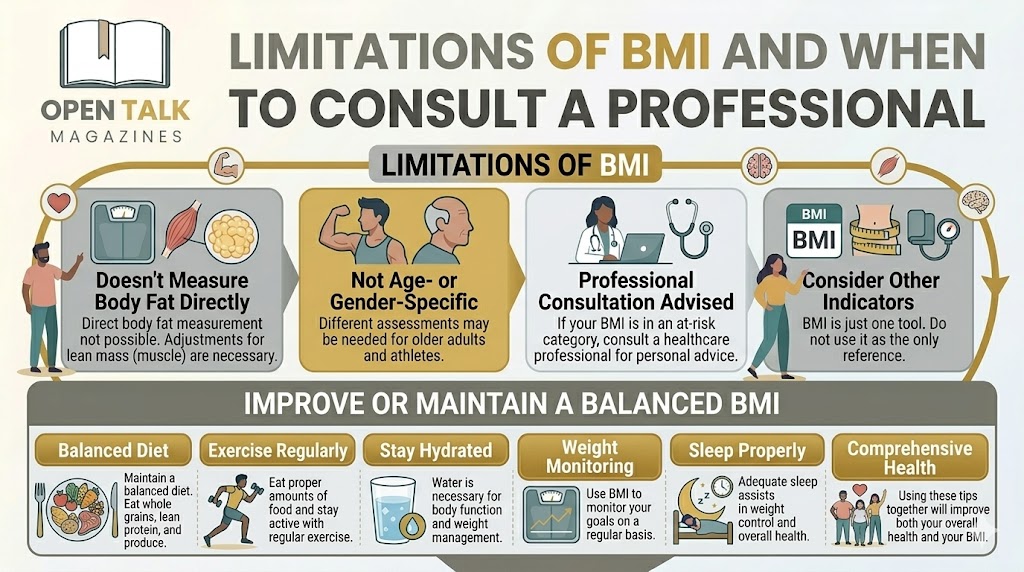
The following are limitations of BMI:
- Doesn’t Measure Body Fat Directly: Adjustments for lean mass must be made.
- Not Age- or Gender Specific: Different assessments may be warranted for older adults and athletes.
- Professional Consultation Advised: Healthcare professionals are better suited to provide personal advice if your BMI is in the at-risk category.
Consider BMI along with other indicators. Don’t use it as the only reference.
Improve or Maintain a Balanced BMI
- Maintain a balanced diet.
- Eat whole grains, lean protein, fruits, and vegetables.
Exercise Regularly
Eat the proper amounts of food and stay active.
- Stay Hydrated: Water is necessary.
Weight Monitoring
- Use BMI to monitor your goals regularly.
Sleep Properly
- Sleep assists in weight control.
- Using these tips will improve both your overall health and BMI.
Examples of Tracking BMI
Jane, 28: Used a body mass index converter while modifying her diet. She moved from the “overweight” to the “normal” category in just three months.
Mark, 35: Tracked his BMI while strength training. He improved his lean mass while his BMI improved. This example shows the value of combining other metrics along with BMI.
Emily, 42: Tracked her BMI to see changes involving pregnancy to alter her daily nutrition on time. body mass index converter can help in meeting different health goals.
Conclusion
Custom body mass index converter are a robust resource for health management. Knowing your BMI, noticing how it changes, and making healthy lifestyle choices empowers you to make health-optimally informed decisions. Calculate your BMI and take your first step on the path to better health.
FAQs
Q1: What is body mass index, and why is it important?
A1: Body mass index is a simple measurement that compares your height and weight to estimate whether your body weight is healthy. A body mass index converter helps people understand their fitness level and possible health risks.
Q2: How to calculate BMI body mass index, correctly?
A2: To calculate BMI body mass index, divide your weight in kilograms by your height in meters squared. A body mass index converter makes this process fast and accurate without manual calculations.
Q3: What is considered a healthy BMI range?
A3: A healthy BMI range is generally between 18.5 and 24. 9. Using a body mass index converter regularly can help you track whether you are underweight, normal weight, overweight, or obese.
Q4: How to calculate body mass index for men and women?
A4: The formula is the same for both men and women. You can use a body mass index converter to instantly check results by entering your height and weight details.
Q5: Can a body mass index converter help with weight loss goals?
A5: Yes, a body mass index converter is useful for setting realistic fitness and weight loss goals. It helps you monitor progress alongside diet and exercise plans.
Q6: How often should I use a body mass index converter?
A6: Most people can check their BMI once every month. However, if you are actively working on fitness goals, you may use a body mass index converter more frequently to monitor changes.
Q7: How do you calculate your body mass index at home?
A7: You can calculate your body mass index at home by measuring your height and weight accurately. Online BMI tools and calculators provide instant results and save time.
Q8: Is BMI accurate for athletes and muscular people?
A8: BMI may not always be fully accurate for athletes or highly muscular individuals because muscle weighs more than fat. A body mass index converter should be used along with other health measurements.
Q9: Can a body mass index converter be used for overall health tracking?
A9: Yes, many people use a body mass index converter as part of their overall health tracking routine. It gives a quick overview of body weight status and health progress.
Q10: Are online body mass index converter tools reliable?
A10: Most reputable online body mass index converter tools are reliable if you enter the correct height and weight information. Always use trusted websites for accurate BMI calculations.