
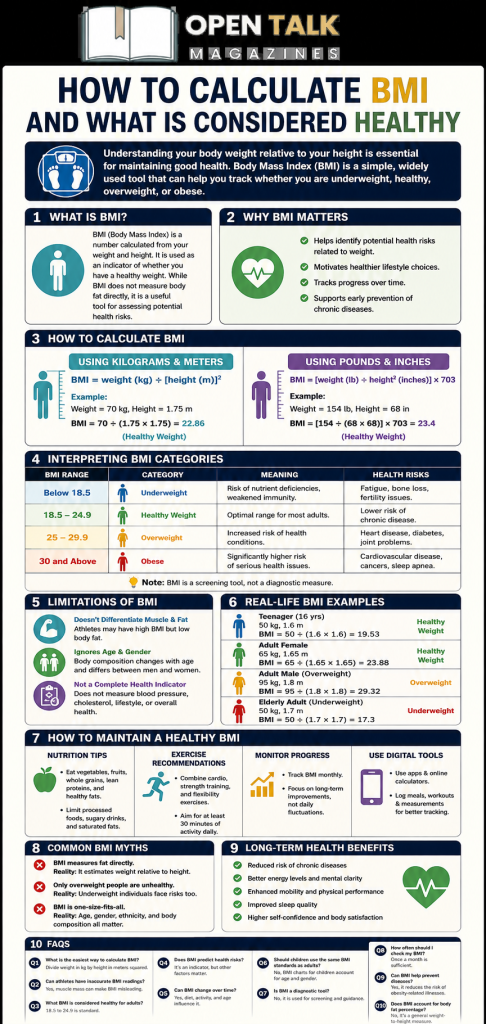
Understanding your body weight relative to your height is essential for maintaining good health. Body Mass Index (BMI) is a simple, widely used tool that can help you track whether you are underweight, healthy, overweight, or obese. At Open Talk Magazine, we explain how to calculate BMI, interpret the results, and make lifestyle changes to stay within a healthy range.
What Is BMI?
BMI, short for Body Mass Index, is a numerical value derived from a person’s weight and height. It is used as an indicator of whether someone has a healthy weight. While BMI does not directly measure body fat, it provides a useful guideline for assessing potential health risks related to weight.
The concept of BMI has been adopted by healthcare organizations worldwide, including the World Health Organization (WHO). It is commonly used in medical screenings, research studies, and health assessments to evaluate weight-related risks.
Why BMI Matters

Monitoring your BMI is important for several reasons. First, it helps identify weight categories that may increase the likelihood of health problems. Underweight individuals may face issues such as weakened immunity, nutrient deficiencies, and fatigue. On the other hand, overweight and obese individuals have a higher risk of conditions like heart disease, diabetes, high blood pressure, and joint problems.
Additionally, BMI can serve as a motivational tool. Tracking your BMI over time allows you to see the impact of lifestyle changes such as diet modifications, exercise routines, or medical interventions. A steady improvement in BMI can boost confidence and encourage healthier habits.
How to Calculate BMI
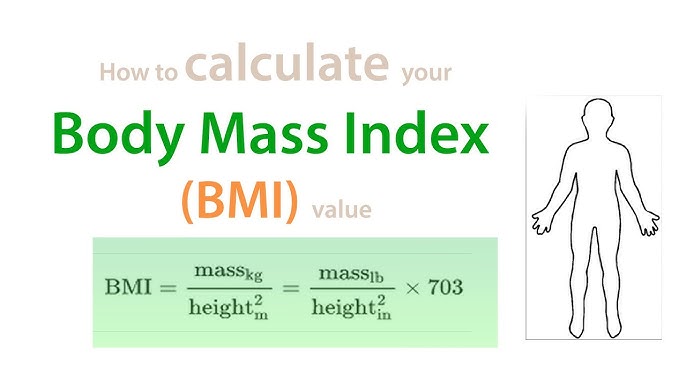
Calculating BMI is simple and requires only two measurements: weight and height. Depending on the units you use, the formula changes slightly.
BMI Formula Using Kilograms and Meters
To calculate BMI in the metric system, use this formula:
BMI = weight (kg) ÷ [height (m)]²
For example, if someone weighs 70 kilograms and is 1.75 meters tall:
BMI = 70 ÷ (1.75 × 1.75) = 70 ÷ 3.0625 ≈ 22.86
This BMI falls within the “healthy weight” range.
BMI Formula Using Pounds and Inches
If you prefer using pounds and inches, the formula is:
BMI = [weight (lb) ÷ height² (inches)] × 703
For example, a person weighing 154 pounds and standing 68 inches tall would have:
BMI = [154 ÷ (68 × 68)] × 703 = [154 ÷ 4624] × 703 ≈ 23.4
This also falls within the healthy range.
Interpreting BMI Categories
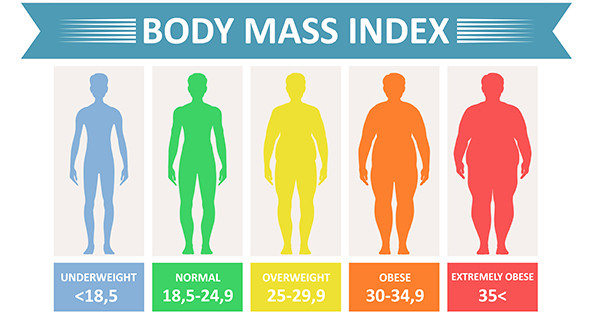
After calculating your BMI, it is essential to understand what the number means. The WHO defines the following categories:
- Underweight: BMI below 18.5 – Risk of nutrient deficiencies, weakened immune system, and potential fertility issues.
- Healthy weight: BMI between 18.5 and 24.9, the optimal range for most adults, associated with a lower risk of chronic disease.
- Overweight: BMI between 25 and 29.9 – Increased risk of heart disease, type 2 diabetes, and musculoskeletal issues.
- Obese: BMI 30 and above – Significantly higher risk of cardiovascular disease, certain cancers, sleep apnea, and mobility problems.
It is crucial to understand that BMI is a screening tool, not a diagnostic measure. A high BMI does not always indicate poor health, nor does a low BMI guarantee good health.
Limitations of BMI
While BMI is helpful, it has some limitations that everyone should be aware of.
Muscle Mass vs. Fat
BMI cannot differentiate between fat and muscle. Athletes or individuals with high muscle mass may have a high BMI but low body fat. For example, a professional bodybuilder might have a BMI of 28, which technically falls into the overweight category, but their body fat percentage is very low.
Age and Gender Differences
BMI does not consider age or sex, both of which affect body composition. Older adults naturally lose muscle mass, which can result in a misleading BMI. Similarly, women generally have a higher body fat percentage than men at the same BMI.
Other Health Indicators
BMI does not assess other important factors such as blood pressure, cholesterol levels, blood sugar, or lifestyle habits. For a comprehensive understanding of health, BMI should be used alongside other assessments.
Real-Life Examples of BMI Calculation
To make the concept more practical, here are some real-life BMI examples:
- Teenager: A 16-year-old weighing 50 kg and 1.6 meters tall:
BMI = 50 ÷ (1.6 × 1.6) ≈ 19.53 – Healthy weight - Adult Female: 65 kg and 1.65 meters
BMI = 65 ÷ (1.65 × 1.65) ≈ 23.88 – Healthy weight - Adult Male (Overweight): 95 kg and 1.8 meters
BMI = 95 ÷ (1.8 × 1.8) ≈ 29.32 – Overweight - Elderly Adult (Underweight): 50 kg and 1.7 meters
BMI = 50 ÷ (1.7 × 1.7) ≈ 17.3 – Underweight
These examples demonstrate how BMI can vary across different ages, genders, and body types.
How to Maintain a Healthy BMI

Achieving and maintaining a healthy BMI involves balanced nutrition, regular physical activity, and lifestyle management. Here’s how:
Nutrition Tips
A diet rich in vegetables, fruits, whole grains, lean proteins, and healthy fats supports a healthy weight. Limit processed foods, sugary drinks, and excessive saturated fats. Portion control and mindful eating also play a significant role.
Exercise Recommendations
Combining cardio exercises like walking, jogging, or cycling with strength training and flexibility routines can help maintain an optimal BMI. Consistency is more important than intensity; even moderate daily activity can make a difference over time.
Monitoring Progress
Tracking your BMI periodically helps identify trends. Focus on long-term improvements rather than day-to-day fluctuations. Journaling meals and workouts can make progress more tangible and motivating.
Using Digital Tools
Smartphone apps and online BMI calculators simplify tracking. Some apps allow you to log meals, workouts, and body measurements over time, providing charts and trends to keep you motivated.
Common BMI Myths
Myth 1: BMI Measures Fat Directly
Reality: BMI estimates weight relative to height but does not differentiate between fat and muscle.
Myth 2: Only Overweight People Are Unhealthy
Reality: Underweight individuals can also face significant health risks, including malnutrition and weakened immunity.
Myth 3: BMI Is One-Size-Fits-All
Reality: Age, gender, ethnicity, and body composition all influence what is considered a healthy BMI.
Long-Term Health Benefits of Maintaining a Healthy BMI
Maintaining a BMI within the healthy range offers numerous benefits:
- Reduced risk of chronic diseases
- Better energy levels and mental clarity
- Enhanced mobility and physical performance
- Improved sleep quality
- Higher self-confidence and body satisfaction
FAQs
Q1: What is the easiest way to calculate BMI?
A1: Divide weight in kg by height in meters squared.
Q2: Can athletes have inaccurate BMI readings?
A2: Yes, muscle mass can make BMI misleading.
Q3: What BMI is considered healthy for adults?
A4: 18.5 to 24.9 is standard.
Q4: Does BMI predict health risks?
A4: It’s an indicator, but other factors matter.
Q5: Can BMI change over time?
A5: Yes, diet, activity, and age influence it.
Q6: Should children use the same BMI standards as adults?
A6: No, BMI charts for children account for age and gender.
Q7: Is BMI a diagnostic tool?
A7: No, it is used for screening and guidance.
Q8: How often should I check my BMI?
A8: Once a month is sufficient to monitor trends.
Q9: Can BMI help prevent diseases?
A9: Yes, maintaining a healthy BMI reduces the risk of heart disease, diabetes, and obesity-related illnesses.
Q10: Does BMI account for body fat percentage?
A10: No, it’s a general weight-to-height measure.