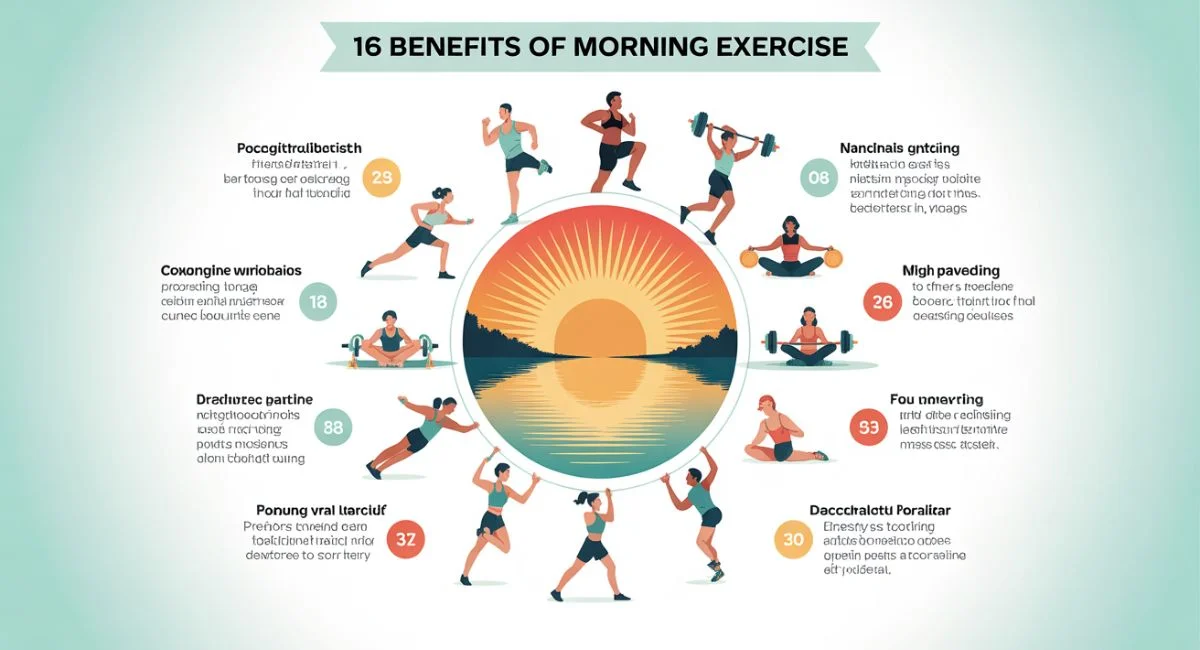
Most people would love to exercise in the morning; however, turning it into a daily habit is a whole other ball game altogether. Have you ever struggled to develop a morning fitness regime for yourself? Then don’t worry, because you are not alone. The alarm clock goes off, and soon enough, you find yourself making excuses for why you cannot fit in your morning exercises today.
The silver lining is that it doesn’t require discipline to form such an important and beneficial habit. This article will tell you precisely how you can form a morning fitness routine that is sustainable even in 2026 and whether you live in the USA or Canada.
Why a Morning Workout Routine Actually Works
Morning workout regime is an exercise regimen conducted on a regular basis in the morning hours before engaging in any daily chores or professional activities. If practiced on a consistent basis, it is probably one of the best fitness regimes to incorporate into your life.
Here is why so many fitness experts and health professionals recommend exercising in the morning:
- You get it done before distractions hit. Meetings, errands, and social plans cannot cancel a workout you have already finished.
- It boosts energy for the entire day. Morning exercise increases circulation, releases endorphins, and sharpens mental focus within hours.
- Consistency is easier to build. Morning routines are tied to fixed cues, waking up, making them easier to automate than evening workouts.
- Better sleep quality. Studies show people who exercise in the morning fall asleep faster and enjoy deeper sleep cycles at night.
- Fat-burning advantage. Working out in a fasted morning state can enhance fat oxidation, especially during low to moderate intensity cardio.
- Improved mood and mental health. Morning exercise reduces cortisol levels and increases serotonin, setting a positive emotional tone for the rest of the day.
Bottom line is very clear those individuals that workout in the morning are much more disciplined compared to those who try to do their workouts in the evening or at some other time of the day.
How to Build a Morning Workout Routine That Sticks: Step-by-Step
Building a lasting morning fitness habit comes down to following the right steps in the right order. Here is a proven step-by-step system to get you started and keep you going:
- Start smaller than you think you need to.
The biggest mistake beginners make is going too hard too fast. Start with just 10–15 minutes of movement each morning. A short routine you actually do beats a perfect routine you skip every time. - Set your wake-up time the night before.
Decide exactly what time you will wake up and set your alarm. Lay out your workout clothes, water bottle, and shoes before you go to sleep. Removing morning friction makes it dramatically easier to follow through. - Anchor your workout to an existing morning habit.
Habit stacking is one of the most powerful tools in behavior science. Attach your workout to something you already do automatically, like right after brushing your teeth or making your coffee. This cues your brain to expect exercise at that moment. - Choose a workout type you genuinely enjoy.
You will never stick to a morning routine you dread. Do you love dancing, lifting weights, yoga, running, or HIIT? Pick what excites you. Enjoyment is the most underrated ingredient in long-term consistency. - Prepare everything the night before.
Set out your gear, load your workout playlist, and know exactly what exercises you are doing before you go to bed. Morning decision fatigue is a real barrier; eliminate it the night before. - Start with 3 days per week, not 7.
Trying to work out every single morning from day one leads to burnout. Commit to Monday, Wednesday, and Friday first. Once that feels easy and automatic, typically after 4 to 6 weeks, add more days. - Track your streak.
Use a simple habit tracker app, a calendar on your wall, or a journal. Marking off completed workouts creates a visual chain you will not want to break. This psychological trigger significantly boosts long-term adherence. - Give yourself a non-food reward.
After your first full week of morning workouts, reward yourself with something you enjoy: a new playlist, a workout accessory, or an activity you love. Rewards reinforce the behavior and make your brain associate morning exercise with positive feelings. - Never miss twice in a row.
Life happens. You will miss a morning workout sometimes, and that is completely fine. The rule is simple: never miss two mornings in a row. One miss is a pause. Two misses are the beginning of a broken habit.
Sample Morning Workout Plans for Every Fitness Level
Not sure what to actually do during your morning workout? Here are three ready-to-use morning exercise routines each designed for a different fitness level and time commitment:
Beginner Morning Routine (15 Minutes)
Perfect for those who are just getting started or returning after a long break. No equipment needed, do this at home before your morning coffee.
- Jumping Jacks 2 minutes (warm-up)
- Bodyweight Squats 3 sets x 10 reps
- Push-Ups (knee or full) 3 sets x 8 reps
- Glute Bridges 3 sets x 12 reps
- Plank Hold 3 x 20 seconds
- Deep breathing and light stretching 2 minutes (cool-down)
Intermediate Morning Routine (25 Minutes)
For those who have been active for a few months and want to increase intensity. A pair of dumbbells is helpful but not required.
- Jump Rope or High Knees 3 minutes (warm-up)
- Dumbbell Goblet Squat 3 sets x 12 reps
- Push-Ups or Dumbbell Press 3 sets x 12 reps
- Dumbbell Romanian Deadlift 3 sets x 10 reps
- Bent-Over Dumbbell Row 3 sets x 10 reps
- Mountain Climbers 3 sets x 20 reps
- Stretching and foam rolling 3 minutes
Advanced Morning Routine (40 Minutes)
For experienced exercisers who want a serious morning challenge. A full set of dumbbells or a gym is ideal for this level.
- 5-minute dynamic warm-up (leg swings, arm circles, light jog)
- Barbell or Dumbbell Back Squat 4 sets x 8 reps
- Bench Press or Push-Up Variations 4 sets x 10 reps
- Romanian Deadlift 4 sets x 8 reps
- Pull-Ups or Lat Pulldown 3 sets x 8 reps
- Arnold Press 3 sets x 10 reps
- HIIT Finisher: 4 rounds of 30 seconds on / 15 seconds off (burpees, jump squats, sprints)
- 5-minute cool-down stretching
Morning Fitness Habits That Make Your Routine Unstoppable
Morning exercise is only effective once you have prepared for it the previous evening, and that is done through a series of tiny habits. Here are some of the best morning exercise habits that should go hand-in-hand with working out:
1. Sleep Before 11 PM
It is impossible to wake up early and exercise properly with only 5 hours of sleep. Get between 7 and 9 hours of sleep per night. Slowly bring your sleeping time forward in small increments of 15 minutes per week.
2. Hydrate Immediately Upon Waking
Water is lost from the body during sleep due to respiration and perspiration. Drinking 16 ounces of water immediately upon waking up will boost metabolism and increase alertness while also preparing your joints for activity. Place a water bottle beside your bed to make it the first thing you grab.
3. Skip the Phone for the First 10 Minutes
Being preoccupied with social media updates or e-mails at the start of the day robs you of concentration and leaves you tired of making decisions before you even begin working. Put away your phone screen-side down till you’ve finished working out. Your messages can wait; your workout cannot.
4. Use a Pre-Workout Cue
The human brain has an incredible reaction to sensory signals. Listen to the same high-energy music before each of your workouts daily. Gradually, when your brain recognizes the beginning of that playlist, it will condition your body to get into workout mode.
5. Eat Light or Train Fasted
For morning workouts under 45 minutes, many people train best in a fasted state, especially for fat loss goals. If you prefer to eat beforehand, keep it light: a banana, a small smoothie, or half a cup of oats 30 minutes before training works well without causing sluggishness.
Early Exercise Tips: How to Wake Up Motivated Every Morning
Motivation alone is not enough to wake up at 5:30 AM and exercise consistently. Here are the most effective early exercise tips used by fitness coaches and high performers across North America:
- Put your alarm across the room. Forcing yourself to physically get out of bed breaks the mental barrier of staying under the covers. Once you are standing, starting your workout becomes dramatically easier.
- Find an accountability partner. Committing to a friend, colleague, or online community makes skipping feel socially costly. Even a simple text check-in with a friend can double your consistency rate.
- Visualize the feeling after your workout. Before bed, spend 60 seconds imagining how energized, proud, and focused you will feel after completing your morning session. Pre-visualization is a proven technique used by elite athletes to drive follow-through.
- Use the 5-second rule. When your alarm goes off, count down from 5 to 1 and physically move before your brain has time to negotiate. This technique, popularized by Mel Robbins, overrides the hesitation that kills morning motivation.
- Reduce your minimum viable workout. On days when you feel truly exhausted, give yourself permission to do just 5 minutes. Almost always, once you start moving, you will complete the full session. The hardest part is always just beginning.
- Celebrate every single session. After every completed morning workout, acknowledge it out loud, in your journal, or to a friend. Positive reinforcement after a behavior dramatically increases the likelihood of repeating it.
5 Morning Workout Routine Mistakes That Kill Consistency
Even with the best intentions, these common mistakes derail most people’s morning exercise goals within the first few weeks:
1. Starting Too Ambitious
Planning 60-minute morning workouts from day one is a recipe for burnout. Start with 10–20 minutes and build up slowly. Small wins compound into massive long-term results.
2. Skipping the Warm-Up
The level of body temperature and joint lubrication is at its lowest during the morning time. Engaging in rigorous physical activity immediately after waking up may lead to injuries due to the absence of warm-up exercises.
3. Relying on Motivation Instead of Systems
Motivation will vary on a daily basis; however, the system will not. Make your morning exercise routine part of your schedule. Do not leave anything up to chance; make sure that you have no decisions to make the night before.
4. Not Adjusting for Your Chronotype
For a night person, waking up at 5 a.m. to exercise forever would be unrealistic. Try to start training as early as it is realistically possible. For instance, 7:30 a.m. is still considered morning time. The important thing is to be consistent.
5. Neglecting Recovery
Working out every single morning without rest days leads to overtraining, fatigue, and eventually complete abandonment of the routine. Schedule at least 2 rest days per week and treat them as seriously as your workout days.
What to Eat Before and After Your Morning Workout
Fueling your morning workout correctly has a significant impact on your energy, performance, and recovery. Here is a simple and practical nutrition guide:
Before Your Morning Workout
- Fasted training (under 45 min): Just water and optionally black coffee or green tea for mental alertness
- Light pre-workout snack (30 min before): A banana, a small handful of dates, or half a cup of oats with honey
- Moderate meal (60 min before): Oats with protein powder, or eggs on whole grain toast with fruit
After Your Morning Workout
- Consume a protein-rich meal or shake within 30–60 minutes of finishing your workout
- Aim for 25–40 grams of protein post-workout to support muscle repair and growth
- Top post-workout breakfasts: Greek yogurt with berries and granola, scrambled eggs with avocado toast, a protein smoothie with banana and oats, or cottage cheese with fruit
- Rehydrate with at least 16–24 oz of water immediately after training
FAQs: Morning Workout Routine 2026
What is the best morning workout routine for beginners in 2026?
The best morning exercise regimen that beginners can undertake in 2026 is a 15-minute workout that engages all parts of the body, done thrice weekly. This should be done using bodyweight workouts such as squats, push-ups, glute exercises, and planks. First, develop the consistency of doing these exercises, then focus on making them more intense.
How do I stick to a morning workout routine consistently?
For staying consistent with morning exercise, one must prepare all that is needed for exercise the previous day, start exercising for shorter periods of time, base the exercise on any other morning activity, record consistency every day, and avoid missing two consecutive days of morning exercise.
Is it better to work out in the morning or evening?
Both morning and evening workouts deliver excellent results. However, morning workouts have a consistency advantage — they are harder to cancel and are naturally tied to a fixed daily cue. Studies also show that morning exercisers maintain their routines significantly longer than evening exercisers. The best time is whichever one you will actually do consistently.
How long should a morning workout routine be for beginners?
Beginners should start with 10 to 20 minutes per morning workout session. This is enough to build the habit and see meaningful fitness improvements without causing burnout. As the routine becomes automatic after 4–6 weeks, gradually increase to 30–45 minutes for greater results.
Should I eat before a morning workout?
For workouts under 45 minutes, most people can train effectively in a fasted state with just water or black coffee. For longer or more intense morning sessions, a light snack 30 minutes before, like a banana or small bowl of oats provides the energy needed for peak performance without causing digestive discomfort.
Conclusion
Creating a workout routine for the morning is not about waking up early — it is about creating the proper processes, beginning gradually, and maintaining the process despite how difficult it might be some mornings. The advice presented in this article has been used by many men and women in the United States and Canada, who have successfully turned their mornings around.
Always keep in mind the key tips discussed above: begin with just 10 to 15 minutes, plan ahead, tie it into another daily process, measure progress through a streak system, and ensure you do not break that streak twice in a row. Even using any three of those tips will make a huge difference in just one or two weeks.
Your peak form, full of energy, is not waiting for the ideal moment; it is waiting for you to get out of bed 20 minutes early.