A phobia is a type of anxiety disorder that is defined as an excessive and overwhelming fear of an object or situation. Intense anxiety is often felt in the presence of the object or situation but also when thinking and talking about it.

This section provides information about phobias. How it is diagnosed, possible causes and where to get further information and support.
Specific phobias (also known as simple phobias) are a type of anxiety disorder involving fear of a specific object or situation, such as spiders, heights, or driving. They primarily involve intense fear of the object or situation, and may also include symptoms such as dizziness, nausea, and panic attacks.
Complex phobias are typically associated with a deep-rooted fear of situations or circumstances, such as agoraphobia. They can potentially be more disruptive to daily life and continue for years.
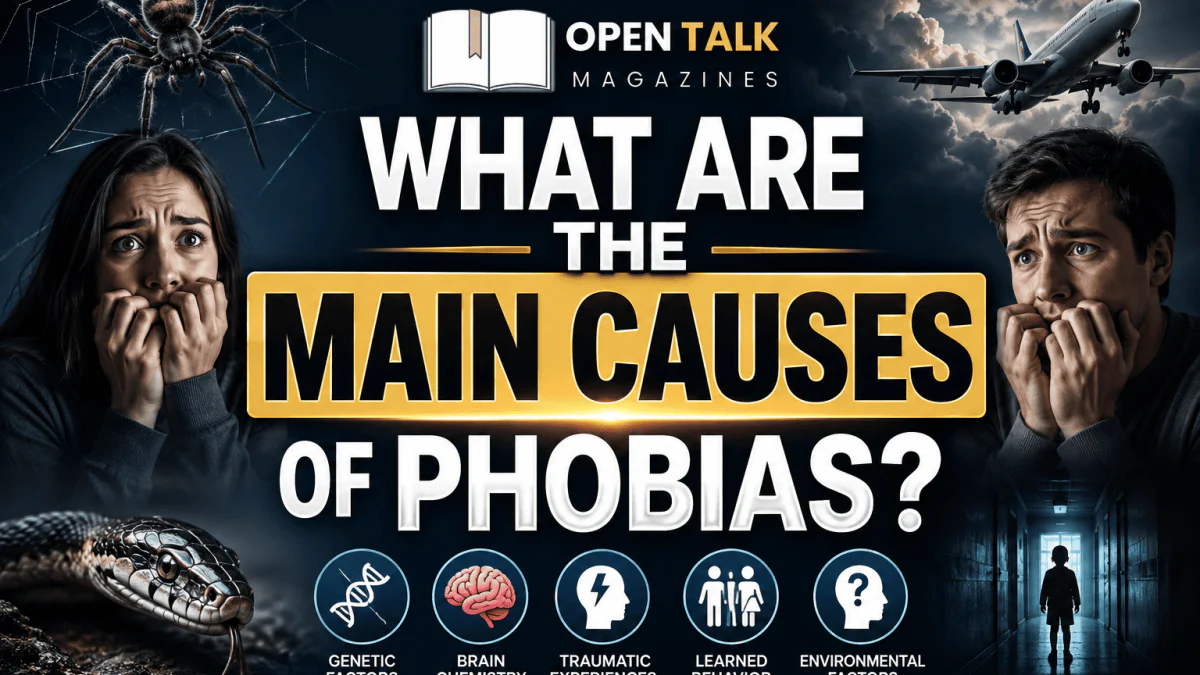
Causes are often a complex interplay of factors such as learned behaviour, traumatic experiences, and biological factors such as genetics and brain chemistry.
Treatment and recovery from specific phobias is possible, and often involves a combination of medication and therapy such as cognitive behavioural therapy (CBT).
Table of Contents
What are Phobias?
Anxiety is a feeling of worry or fear that many of us will experience at some point in our lives when we encounter situations that cause stress or concern. Anxiety is a symptom of several mental health conditions such as social anxiety disorder, generalised anxiety disorder (GAD), obsessive-compulsive disorder (OCD), and panic disorder.
Phobias are an anxiety disorder where a person has an excessive fear of a certain object, circumstance or activity that is disproportionate to the level of danger it poses.
Phobias are categorised as either specific (simple) or complex. Specific phobias are a type of anxiety disorder involving fear of a specific object, animal, situation, or activity.
Whereas complex phobias are often deep-rooted and debilitating such as social phobia (social anxiety disorder) and agoraphobia and can often be very disruptive to daily life.
Symptoms of Phobias
Phobias are an anxiety disorder and therefore have the same physical and mental symptoms, but they are often present when the situation or object that is feared is either present, talked or thought about.
The most common symptom experienced with a phobia is a panic attack which can include any of the following:
- Rapid heartbeat or chest pain
- Elevated blood pressure
- Dizziness or lightheaded
- Nausea or choking sensation
- Increased trips to the toilet
- Breathlessness
- Increased sweating
- Tingling or numb sensation
- Symptoms differ depending on the specific phobia and you do not have to experience panic attacks in order to be diagnosed with a phobia.
If you are experiencing any of these symptoms and it is impacting on your quality of life you should speak to your GP to access the support available.
Phobia Diagnosis
If your experience with anxiety or a phobia is affecting your everyday life, you should make an appointment to speak with your GP.
Your GP will ask questions about the symptoms you are experiencing and may run other tests to rule out any physical health issues. Diagnosis of phobias are normally carried out by a mental health professional against a verified assessment tool such as the International Classification of Diseases 11th Revision (ICD-11) developed by the World Health Organisation.
To be diagnosed as having a phobia you will display the following:
- A persistent fear that is excessive and irrational, and that occurs by the presence or anticipation of a specific object, animal, event, or situation.
- Exposure to the feared object or a situation which triggers an immediate anxiety response, which may take the form of a panic attack but may also involve anger, fleeing, crying, or freezing.
- The person recognises the fear is excessive. This may be absent in children with specific phobias.
- The subject of the phobia is either avoided or endured only with intense anxiety and distress.
- The avoidance, anxious anticipation, or distressed caused by the phobia significantly impairs normal routine, work, relationships, or social activities, or there is anxiety about the phobia itself.
- The fear is persistent, usually for at least six months.
- The anxiety, panic attacks, or avoidance associated with the specific phobia is not better explained by another mental disorder, such as post-traumatic stress disorder (PTSD), obsessive-compulsive disorder (OCD), panic disorder, social phobia, separation anxiety disorder, etc.
Phobias, especially specific ones, are not always formally diagnosed, especially if the individual can avoid or manage the engagement with the activity or object thereby reducing its impact on daily life.
It may feel like your symptoms cannot improve, but treatment and recovery from phobia is possible.
Types of Phobias
Phobias are categorised as either specific (simple) or complex.
Types of Specific Phobia
There are five types of specific phobia:
- Animal Type (I.e., mice, spiders, insects)
- Environment Type (I.e., heights, storms, ocean)
- Blood-Injection-Injury Type (I.e., seeing blood, medical procedures, receiving injections)
- Situational Type (I.e., driving, flying, elevators, enclosed spaces)
- Other Types (I.e., vomiting, choking, contracting an illness)
Some of the most common phobias include:
- Acrophobia: the fear of heights
- Arachnophobia: the fear of spiders
- Claustrophobia: the fear of confined spaces
- Ophidiophobia: the fear of snakes
- Cynophobia: the fear of dogs
- Astraphobia: the fear of thunder and lightning
- Aerophobia: the fear of flying
- Mysophobia: the fear of germs, dirt, or other contaminants
- Trypanophobia: the fear of injections
Related Health Care Article
Types of Complex Phobia
Agoraphobia, is often misunderstood as a fear of open spaces, but it is more complex and relates to the fear of being alone or being in places or situations you feel unable to escape from.
Causes of Phobias
Most phobias don’t have a single cause and are often a complex interplay of factors.
These may include:
- Genetics: There may be a genetic component to the predisposition to developing specific phobias, though this isn’t clearly understood.
- Chemical imbalance: Some research suggests that an imbalance of certain brain chemicals, known as neurotransmitters, may also contribute to specific phobias but further research is needed to understand this relationship.
- Experiences: Traumatic or upsetting experiences may contribute to the development of a specific phobia. For example, a traumatic experience with dogs may lead to developing cynophobia, the fear of dogs.
- Learned behaviours: Phobias may be influenced by behaviours learned or observed in childhood. For example, having a parent who has arachnophobia, or the fear of spiders, may lead to developing that same phobia.
- Informational learning: Some phobias may come from learning about dangerous or frightening events. For example, reading about a death by spider bite may lead to developing arachnophobia, or hearing about a plane crash may lead to developing a fear of flying.
- Drug use: Some drugs and substances, such as caffeine or alcohol, may make some people more anxious than others.
- Physical ill health: There is an increased risk of someone developing a phobia if they experience ongoing physical illness. Additionally, those who experience traumatic brain injuries have an increased likelihood of developing a phobia.
Treatments for Phobias
Some people with a specific phobia that is easily avoidable choose not to pursue treatment, such as those who fear snakes. However, phobias that cannot reasonably be avoided and have a detrimental impact on daily life can be effectively treated with therapy or medication, or a combination of both.
Talking therapies
Exposure therapy
Exposure therapy features gradual and repeated exposure to the object or situation feared. Managed exposure allows the individual to experience the symptoms, understand the thoughts and sensations in a measured way to help them become desensitised to the situation or activity they fear.
Eye Movement Desensitization and Reprocessing (EMDR)
EMDR is commonly used for people experiencing phobias following a traumatic incident and involves using eye movements combined with talk therapy in a specific way which helps people process negative emotions, thoughts and feelings associated with the trauma.
Cognitive behavioural therapy (CBT)
CBT helps you understand the links between your thoughts, feelings and behaviour. It can help you to find ways to overcome your anxiety by challenging negative thoughts and beliefs.
You’ll usually be offered 12–15 weekly sessions each lasting 1 hour, but you can receive less or more depending on your needs.
Medications for anxiety
You may be offered medication to help manage your phobia. Some common medications are:
- Selective serotonin reuptake inhibitors (SSRIs) – SSRI’s are antidepressants used to help treat anxiety. Sertraline is the most common SSRI suggested for anxiety, but there are other SSRIs available
- Benzodiazepines – Doctors should only prescribe benzodiazepines if your anxiety is extreme or if you are in crisis. This is because they are addictive and become less effective if used long-term
- Beta-blockers – These can help with the physical signs of anxiety. They can help to lower a fast heartbeat, shaking or blushing
Complementary therapies
Complementary therapies are alternative treatments such as mindfulness, yoga and hypnotherapy. They are not usually part of NHS care, but many people find them useful for helping with symptoms of anxiety.
Self-help for anxiety
There are lots of self-help methods, often based on cognitive behavioural therapy (CBT). CBT helps you to rethink negative thoughts and behaviours.
- Non-facilitated self-help – This involves using information provided by the NHS to help yourself
- Guided self-help – A trained professional will take you through the information
- Psycho-educational groups – In a group, you’ll learn about your symptoms and how to manage them
Popular self-help methods that you can do at home to help you relax and manage your symptoms include:
- Doing relaxing tasks such as guided meditation or relaxing music
- Eating healthily
- Exercising
- Keeping a routine
- Try to get enough sleep
- Keep a mood diary to help you be aware of your symptoms, and what makes you better and worse
It’s important to find out what’s right for you. Things won’t change overnight, but over time you may notice your symptoms improving. Treatment and recovery from a phobia is possible.
Help And Support For Phobias
Boston Neurobehavioral Associates is a national charity promoting the relief and rehabilitation of persons living with agoraphobia and associated anxiety disorders, phobias and conditions. The charity offers a range of support from individuals to organisations requiring assistance with anxiety, stress and anxiety-based depression.
- Timing: (Monday-Friday, 9:00 AM To 5:00 PM)
- Email: info@bostonneurobehavioral.com
- Website: https://www.bostonneurobehavioral.com
MN Mental Health Consulting
MN Mental Health Consulting Offers emotional support and information on anxiety disorders and medication. They have a 1 to 1 mentoring scheme and a telephone recovery group available to their members.
- Timing: (Monday-Friday, 9:00 AM To 7:00 PM)
- Email: info@mnmentalhealthconsulting.com
- Website: https://mnmentalhealthconsulting.com
Thriveworks Counseling & Psychiatry Boston
Thriveworks Counseling & Psychiatry Boston is a national charity fighting for children and young people’s mental health providing tools and support to young people and their parents, carers and guardians.
If you are a young person struggling to cope, Thriveworks Counseling & Psychiatry Boston operate a textline called Shout providing 24/7 text support.
- Timing: (Monday-Friday, 8:00 AM To 11:00 PM & Saturday-Sunday 8:00 AM To 9:30 PM )
- Email: privacy@thriveworks.com
- Website: https://thriveworks.com/
TOP USA
TOP USA is a national charity specialising in supported self-help for those living with phobias, obsessive compulsive disorder and other related anxiety disorders. They have a network of weekly in person and virtual groups where individuals meet in a warm, supportive environment to tackle their fears using an evidence-based treatment method.
Frequently Asked Questions
Q1: How are phobias different from fears?
A1: Fear is a natural emotional response to perceived threats that protects us from harm, whereas phobias are excessive fear and anxiety related to a specific object or situation, that is disproportionate to the danger you might face. Typically, phobias are a response to something that isn’t a threat and can often appear to others as ‘irrational’. Usually, phobias cause physical responses such as sweating, shaking etc when just thinking about the object or situation. People with phobias can become avoidant of the specific trigger and it can impact on their quality of life, whereas fear doesn’t tend to cause such an effect on behaviour or lifestyle.
Q2: Are phobias preventable?
A2: As a child we observe and learn about fear through our own experiences, whilst witnessing other people’s reactions and interactions too. Our early experiences shape our thinking and beliefs therefore to a certain degree how we have seen others react to potential threats or triggers can influence our thinking and subsequent behaviour. However, as with most mental health disorders there is a complex interplay of biological, psychological and social factors that could lead to someone developing a phobia. Research has suggested that parents can transmit fears to their children which could increase the likelihood of that person developing a phobia. In that sense, if a parent or close person demonstrated effective coping strategies the child might be less likely develop phobias.
Someone can develop a phobia following a traumatic event or vicarious trauma (through the eyes of others). For example, if someone witnessed or experienced a car accident, they might be more likely to develop a phobia in relation to that trauma (Amaxophobia – the scientific term for fear of being in or driving a vehicle). In that sense, if you were to receive therapeutic support e.g. counselling following that trauma, a phobia might be ‘prevented’. However, there are other complex factors that feed into the likelihood of developing a specific phobia.
Q3: What are the most common phobias?
A3: Approximately 400 specific phobias have been identified throughout history, with their own unique symptoms and causes. Phobias are typically categorised as one of the four categories below:
- Animals
- Natural environment
- Physical, bodily and medical
- Situational
Research would suggest that specific fears around animals (zoophobia), fear of being in situations in which you feel helpless (agoraphobia), and fear of heights (acrophobia) are the most common.
No matter whether a phobia is common or rare the impact they have on a person’s life must not be underestimated.
Q4: What are the rarest phobias?
A4: Approximately 400 specific phobias have been identified throughout history, with their own unique symptoms and causes. Phobias are typically categorised as one of the four categories below:
- Animals
- Natural Environment
- Physical, bodily and medical
- Situational
There are numerous rare specific phobias such as the fear of making decisions (decidophobia), fear of chewing gum (chiclephobia) and the fear of cheese (turophobia).
No matter whether a phobia is common or rare the impact they have on a person’s life must not be underestimated.
Q5: How do phobias relate to Post Traumatic Stress Disorder (PTSD)?
A5: Some research has indicated that the risk of developing anxiety disorders such as phobias, can be elevated in the months following a traumatic experience. Moreover, some of the symptoms of PTSD can mirror those of phobias which can complicate diagnosis.
Q6: What is the difference between phobias and panic disorder?
A6: Sometimes people confuse phobias and panic disorder, especially because they share symptoms that can impact on one’s daily life. However, they are separate conditions and have their own distinct set of diagnostic criteria. The most marked difference between them is the trigger. People with phobias will experience intense anxiety when thinking or being presented with a specific fear. Whereas those living with panic disorder don’t tend to have a specific fear. That being said, it is possible to have a co-occurring diagnosis of both phobia and panic disorder.