Your indoor air is up to 5 times dirtier compared to outdoor air and this is a fact that most people do not know. Air pollutants from chemicals in cleaning agents, furniture, paint, and other building materials accumulate indoors daily, without your knowledge. However, the best solution for this problem is air-purifying plants, which can transform the quality of air inside your home without breaking your budget.
This guide provides information on 15 plants known to effectively remove toxins from indoor air, increase oxygen levels, and create a healthy atmosphere. The guide covers both small apartments in Toronto and houses located in California.
Why Air Purifying Plants Actually Work
The mechanisms of cleaning the indoor air using air purification plants include photosynthesis whereby carbon dioxide is taken in and oxygen released, and phytoremediation, where the plants take in harmful elements from the air using the roots and leaves and these are decomposed by soil microorganisms. This was proved by NASA’s Clean Air Study.
Some of the pollutants in the indoor environment that can be eliminated by using indoor plants include:
- Formaldehyde: found in furniture, carpets, and cleaning products
- Benzene: from paints, plastics, and cigarette smoke
- Trichloroethylene: from adhesives and varnishes
- Xylene: from printing inks and rubber products
- Ammonia: from cleaning products and fertilizers
- Carbon monoxide: from gas appliances and fireplaces
For maximum air purification, experts recommend one medium to large plant per 100 square feet of living space.
15 Best Air Purifying Plants for a Healthier Home
1. Spider Plant (Chlorophytum comosum) Best for Beginners
The Spider Plant is the perfect beginner air purifier plant. Not only does it clean the air by removing formaldehyde and xylene, but it will do well in low light areas and is practically indestructible. This plant even bears baby plantlets that you can propagate into new plants.
- Light: Indirect bright light
- Watering: Once a week
- Toxins removed: Formaldehyde, xylene, carbon monoxide
- Pet safe: Yes
2. Peace Lily (Spathiphyllum) Best for Low Light
The peace lily is unique among flowering plants because it does well in dark environments, which makes it ideal for bathrooms and poorly lit living rooms. This plant has the ability to remove chemicals like ammonia, benzene, and formaldehyde, as well as mold spores.
- Light: Low to medium indirect light
- Watering: Weekly droops when thirsty
- Toxins removed: Benzene, formaldehyde, ammonia, trichloroethylene
- Pet safe: No toxic to cats and dogs
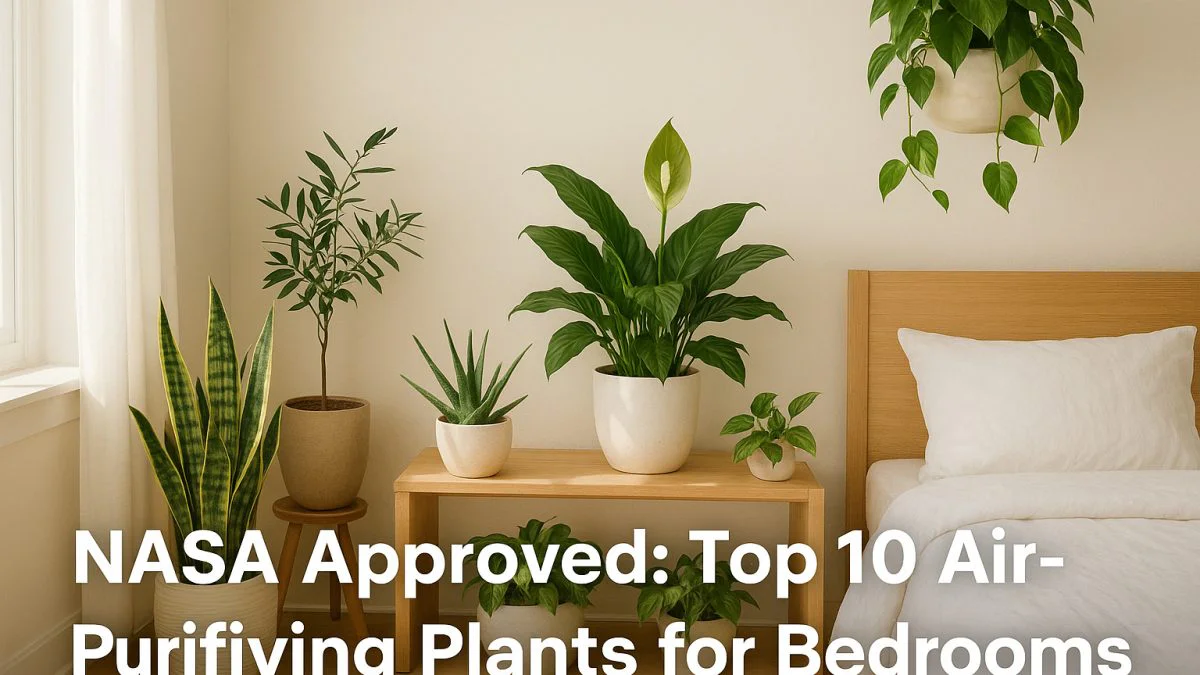
3. Snake Plant (Sansevieria / Dracaena trifasciata) Best for Bedrooms
Unlike most plants, the snake plant converts CO2 to oxygen at night, making it the single best plant for bedrooms. It is practically indestructible, tolerates neglect beautifully, and removes five major air toxins simultaneously. One of the top-rated houseplants in North America.
- Light: Any light tolerates low light
- Watering: Every 2 to 6 weeks
- Toxins removed: Formaldehyde, benzene, trichloroethylene, xylene, toluene
- Pet safe: No
4. Pothos (Epipremnum aureum) Best for Small Spaces
Pothos is a trailing vine that thrives in small spaces, hanging baskets, and shelves. It is one of the most powerful formaldehyde-removing plants available and adapts to virtually any light condition. A 2026 favorite across apartment dwellers in both the USA and Canada.
- Light: Low to bright indirect light
- Watering: Every 1 to 2 weeks
- Toxins removed: Formaldehyde, benzene, xylene
- Pet safe: No
5. Boston Fern (Nephrolepis exaltata) Best Natural Humidifier
Boston ferns act as natural humidifiers, releasing moisture into the air while simultaneously removing formaldehyde and xylene. They are ideal for dry climates and heated indoor spaces during Canadian winters. Place them in humid bathrooms or kitchens for best results.
- Light: Indirect bright light
- Watering: Keep the soil moist by misting regularly
- Toxins removed: Formaldehyde, xylene
- Pet safe: Yes
6. Rubber Plant (Ficus elastica) Best Large Statement Plant
Rubber plants are striking, large-leafed statement plants that filter formaldehyde with exceptional efficiency. Their large surface area means greater air-filtering capacity per plant. They prefer bright indirect light and grow quickly, making them one of the best value-for-money air purifying houseplants.
- Light: Bright indirect light
- Watering: Every 1 to 2 weeks
- Toxins removed: Formaldehyde, carbon monoxide
- Pet safe: No
7. Aloe Vera Best Multitasker
Aloe vera earns its place twice over it purifies air by removing formaldehyde and benzene while also providing a natural first-aid gel for burns and skin irritation. Keep one in your kitchen where cooking fumes and cleaning product fumes are most concentrated.
- Light: Bright, direct, or indirect light
- Watering: Every 2 to 3 weeks drought-tolerant
- Toxins removed: Formaldehyde, benzene
- Pet safe: No
8. Bamboo Palm (Chamaedorea seifrizii) Best for Large Rooms
The bamboo palm is one of the highest-rated air purifiers in the NASA study, excelling at removing benzene, trichloroethylene, and formaldehyde. Its tropical appearance adds elegance to living rooms and offices, and it also acts as a natural humidifier in dry indoor environments.
- Light: Bright indirect light
- Watering: Weekly keep moist but not soggy
- Toxins removed: Benzene, trichloroethylene, formaldehyde
- Pet safe: Yes
9. ZZ Plant (Zamioculcas zamiifolia) Most Drought-Tolerant
The ZZ plant is the ultimate low-maintenance air purifier. It thrives on neglect, tolerates deep shade, and only needs watering once a month. Despite its easy-care nature, it effectively removes benzene, toluene, and xylene from indoor air. Perfect for busy households.
- Light: Low to bright indirect
- Watering: Monthly
- Toxins removed: Benzene, toluene, xylene, ethylbenzene
- Pet safe: No
10. Chinese Evergreen (Aglaonema) Best for Colorful Variety
Chinese evergreens come in stunning red, pink, green, and variegated varieties, adding visual interest while purifying air from benzene and formaldehyde. They adapt to low light, making them perfect for offices and interior rooms without windows.
- Light: Low to medium indirect
- Watering: Every 1 to 2 weeks
- Toxins removed: Benzene, formaldehyde
- Pet safe: No
11. Dracaena Best for Removing Trichloroethylene
Dracaena varieties (marginata, fragrans, and reflexa) are among the most effective plants for removing trichloroethylene, a toxin common in adhesives and dry-cleaned clothing. They grow tall and architectural, making them excellent corner plants in living rooms and offices.
- Light: Medium indirect light
- Watering: Every 1 to 2 weeks
- Toxins removed: Trichloroethylene, formaldehyde, benzene, xylene
- Pet safe: No
12. English Ivy (Hedera helix) Best for Mold Reduction
English ivy is uniquely effective at reducing airborne mold, a major indoor air quality concern in humid climates across Canada and the Pacific Northwest of the USA. Studies show ivy can reduce airborne mold by up to 60% within hours when placed in bathrooms or basements.
- Light: Bright indirect light
- Watering: Every 1 to 2 weeks
- Toxins removed: Formaldehyde, benzene, mold spores
- Pet safe: No
13. Chrysanthemum Best Flowering Air Purifier
Chrysanthemums are the most effective flowering plant for removing benzene, a toxin found in glues, paints, and detergents. They add cheerful color to any room while working hard to clean the air. Place them near newly painted walls or fresh furniture for maximum benefit.
- Light: Bright indirect to direct light
- Watering: Keep soil consistently moist
- Toxins removed: Benzene, formaldehyde, ammonia
- Pet safe: No
14. Heartleaf Philodendron Best for Formaldehyde
The heartleaf philodendron is one of the most efficient formaldehyde-removing plants you can own — making it especially valuable in homes with new furniture, flooring, or cabinetry. It grows rapidly, trails beautifully, and tolerates a wide range of light conditions.
- Light: Low to bright indirect
- Watering: Every 1 to 2 weeks
- Toxins removed: Formaldehyde
- Pet safe: No
15. Lavender Best for Sleep and Stress Relief
Lavender rounds out this list as the only plant that combines air purification with proven aromatherapeutic benefits. Its scents has been clinically shown to reduce anxiety, lower heart rate, and improve sleep quality. Keep a pot on your bedroom windowsill for clean air and a better night’s rest.
- Light: Bright direct sunlight
- Watering: Every 1–2 weeks — drought-tolerant
- Toxins removed: Airborne bacteria, mold spores
- Pet safe: Generally safe — avoid large consumption
How Many Air Purifying Plants Do You Need?
For meaningful air purification results, follow this simple guideline:
- Small room (under 100 sq ft): 1 to 2 medium plants
- Medium room (100 to 200 sq ft): 2 to 3 medium or 1 to 2 large plants
- Large room (200 to 300 sq ft): 3 to 4 medium or 2 to 3 large plants
- Open-plan living area: 6 to 8 plants distributed throughout the space
Variety matters too different plants target different toxins, so mixing species creates a more comprehensive air-cleaning system for your home.
Best Placement Tips for Air Purifying Plants
- Bedroom: Snake plant (nighttime oxygen), lavender (sleep), spider plant
- Kitchen: Aloe vera (cooking fumes), pothos, spider plant
- Bathroom: Peace lily, Boston fern, English ivy (mold reduction)
- Living room: Rubber plant, bamboo palm, dracaena, ZZ plant
- Home office: Peace lily, pothos, Chinese evergreen
FAQs: Air Purifying Plants
Do air purifying plants actually make a difference to indoor air quality?
Yes. NASA Clean Air Study found that certain houseplants can remove up to 87% of indoor air toxins within 24 hours. While a single plant has a limited effect, strategically placing multiple plants throughout your home creates a meaningful and measurable improvement in indoor air quality over time.
What is the best air purifying plant for a bedroom?
The snake plant is the best air purifying plant for bedrooms because it uniquely releases oxygen at night rather than during the day. This means it actively improves the air quality while you sleep. Lavender is the best second choice for bedrooms thanks to its proven sleep-enhancing aromatherapy benefits.
Are air purifying plants safe for pets?
Many popular air purifying plants are toxic to cats and dogs, including peace lily, pothos, snake plant, and dracaena. Pet-safe options include spider plant, Boston fern, bamboo palm, and areca palm. Always check the ASPCA toxic plant database before adding a new plant to a pet-friendly home.
How long does it take for houseplants to improve indoor air quality?
NASA research suggests that plants begin removing toxins from indoor air immediately, with measurable reductions in pollutant levels within 24 hours. Sustained improvement in overall air quality is typically noticeable within 2 to 4 weeks of placing an adequate number of plants throughout your living space.
What are the easiest air purifying plants to care for?
The easiest air purifying plants to maintain include the snake plant (water every 2 to 6 weeks), ZZ plant (water monthly), pothos (water every 1 to 2 weeks), and spider plant (water weekly). All four are extremely forgiving, tolerate low light, and are ideal for beginners or busy households.
Conclusion
Adding air purifying plants to your home is one of the simplest, most beautiful, and most cost-effective investments you can make in your family’s health in 2026. Whether you start with a single snake plant on your bedside table or create a full indoor garden across multiple rooms, every plant you add makes a genuine difference to your indoor air quality.
Start with the easiest options: spider plant, pothos, or ZZ plant. Build your collection gradually, and place plants strategically in the rooms where you spend the most time. Your lungs (and your home’s aesthetics) will thank you.