Handmade textiles give a dining table a distinct presence from across a room, long before anyone is close enough to notice individual stitching or thread. Light catches the weave differently, creating a subtle texture where a standard printed cloth would simply lie flat.
That difference is really the whole reason a home textile piece changes how a table feels, long before anyone sits down at it.
What Makes a Runner Different From a Printed Cloth
Laid down the center of the table, a runner is usually the first thing anyone actually sees, catching the eye before plates or anything else arrives. An embroidered table runner does something a printed one can’t quite manage, the thread sits slightly raised off the fabric, so the pattern has real depth instead of just color.
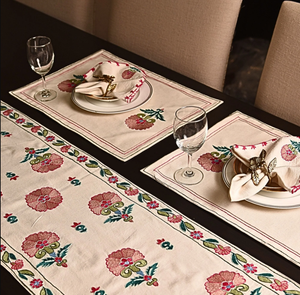
No two motifs come out exactly identical either, a small variation here, a slightly different spacing there. People usually mean exactly this when they say dining table decor feels more personal, nothing about it was stamped out the same way twice.
The Napkin Is the Piece Guests Actually Touch
Runners get seen, while napkins made from handmade textiles get held, unfolded, and used throughout a meal, allowing the rich texture to register in a way a runner never quite does.
Real hand-finishing shows up clearly in dining table napkins, a slightly uneven hem, a border that was actually stitched rather than printed on, carrying that texture directly into someone’s hands. It’s a small thing, but it’s probably the most physically intimate piece on the whole table.
Trolley Mats Do Their Job Quietly
Little attention goes to trolley mats, right up until a hot dish goes straight onto bare wood and everyone remembers exactly why they exist. Protecting the surface is the actual job, but that doesn’t mean the piece has to be purely functional.
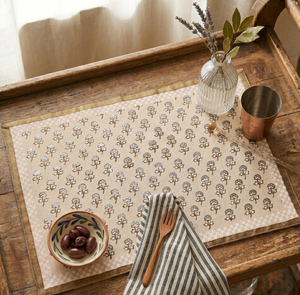
Carrying the same kind of detail as a runner or napkin, just on a smaller, more practical scale, hand made trolley mats are proof that even the piece nobody really looks at can still carry real craft.
A few things that usually signal real handwork on any textile piece:
- Slightly uneven stitching, not perfectly machine-regular
- Natural variation in thread color from one section to the next
- A motif that doesn’t repeat identically across the piece
- Visible, deliberate finishing at the edges or selvage
Cushion Covers Take the Look Beyond the Table
Dining areas rarely end exactly at the table’s edge. A nearby bench, a couple of chairs pulled up against a wall, these pieces are part of the same room, which is exactly where cushions come in.
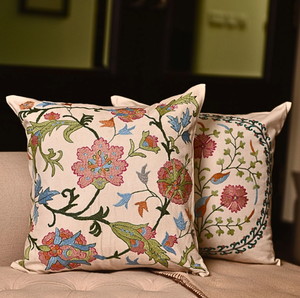
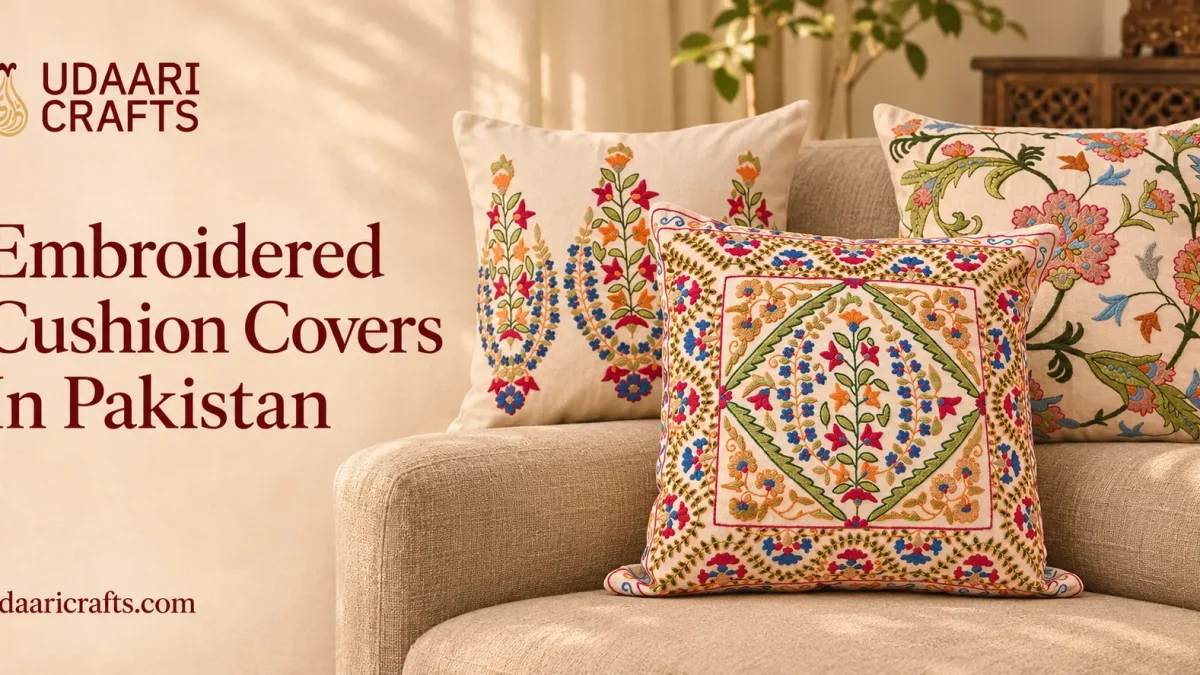
Similar detail shows up in embroidered cushion covers pakistan artisans work on, a raised motif, a border with real texture, picking up on everything already covered in the runner and napkins.
Shoppers adding handmade cushion covers pakistan sellers list to a dining nook usually aren’t trying to match the table exactly, more just echoing the same handmade feeling into the seating nearby, so the whole area reads as one considered space.
Mats Handle the Days Without Much Fuss
Runners tend to come out for something, a guest, a proper sit-down meal, a bit of occasion. Mats are different, meant for the table that gets used every single day, breakfast, a quick lunch, nothing special about the moment at all.
Built for that kind of daily use, dining table mats usually trade a little of the runner’s drama for something sturdier, still handmade, still carrying texture, just built to survive far more frequent use.
A few situations worth matching pieces to specifically:
- Everyday family dinner: mats alone, nothing more elaborate, something practical that can handle daily wear
- Small festive gathering: the runner and napkins together, laid out for a meal that’s a bit more considered
- Gifting a set: the runner with a few matching napkins, a complete, giftable moment rather than loose pieces
- Dining nook doubling as a workspace: cushion covers, carrying the handmade look into the seating itself
Buying a Set That Actually Matches
Building a full set rarely happens in one purchase, and that’s genuinely fine, most collections grow one piece at a time. What matters more is checking fabric weight and thread tone against whatever’s already been bought, since handmade textiles pieces from different batches can vary more than a machine-printed set ever would.
Easier in some ways and harder in others, shopping table mats and runners online, sellers list separately makes it simple to pick exactly what’s needed, harder to judge how a new piece will actually sit next to something already at home without seeing them side by side first.
Two or Three Pieces of Handmade Textiles Dining Table Decor
Appealing as a full range of dining table accessories sounds in a single listing in handmade textiles, most tables genuinely only need two or three pieces to feel considered, not the entire catalog bought at once.
Most of what a table actually needs sits in the pieces that get seen and touched most often, a runner and a set of napkins. Everything else, the mats, the cushion covers, can follow later, once it’s actually clear what the space is missing.
Where This Leaves the Table
Tables rarely get dressed all at once. They usually pick up character one piece at a time, a runner this season, napkins the next, cushion covers whenever the seating nearby finally gets noticed too.
That slow accumulation is really what handmade dining table decor is built for, pieces added as they’re actually needed, not bought all together and forgotten.