
You bought the glass table. The white ceramic dinnerware. The matching napkin rings. So why does your dining room still feel like a hotel lobby?
It’s not a styling problem. It’s a material problem. Glass, steel, and glazed ceramic photograph well but hold no warmth.
This is where thoughtful dining table decoration earns its keep. Swapping in natural materials, real wood, hand-plaited palm leaf, woven grass, doesn’t require a renovation. It just asks you to choose texture over polish.
Here are three simple ways to bring warmth back to a table that’s technically perfect and somehow still cold.
The Grounding Effect of Natural Wood
A handful of small studies have measured what happens when people touch uncoated wood versus steel or plastic. The wood group consistently showed lower stress markers. It’s not a large body of research, and nobody’s claiming a dinner plate will change your mood, but the pattern holds up every time it’s been tested.
You don’t need a lab to notice this at your own table. A wooden plate or bowl feels warmer to the touch within seconds. Glazed ceramic stays cool the entire meal.
There’s a practical upside beyond feel, too. Chefs have long used dark wood as a high-contrast serving surface, since the deep tone makes fresh greens, reds, and yellows read as more vivid against it. It’s a plating trick worth borrowing at home.
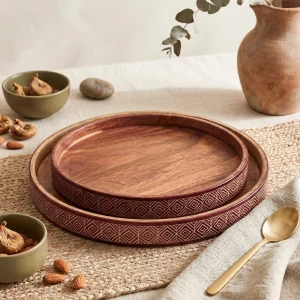
A few ways to bring this into daily use:
- Swap standard dinner plates for handmade wooden plates at one meal a week before making it a habit
- Use a deep wooden bowl for salads or roasted vegetables, where the color contrast does the most work
- Look for pieces with visible grain and minor irregularities. These are signs of solid wood, not veneer
Softening the Edges with Woven Textures
Wood everywhere starts to feel like a cabin. Add too much of one texture and a room stops feeling designed and starts feeling accidental. This is where basketry earns its spot on the table.
Natural basketry solves this. The lighter, breathable tones of woven palm leaf or straw sit in visual contrast to dark wood, giving the eye somewhere to rest between the two.
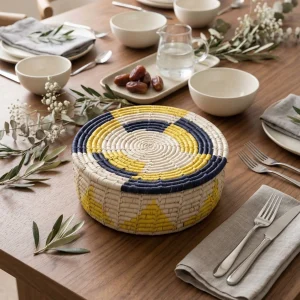
Function matters as much as looks here. A woven hotpot keeps bread or flatbread warm without the plastic or steel liners that break the natural palette you’re building. Handmade woven items from Pakistan bring this same authenticity in table mats and trays, offering an alternative to mass-produced synthetic pieces without asking you to compromise on daily use.
A few ways to work this in:
- Use a woven tray as a base layer under a wooden serving bowl, so the two textures sit together rather than compete
- Choose a woven hotpot for bread service instead of a plastic-lined basket
- Keep the woven pieces in lighter, undyed tones so they contrast with wood rather than blend into it
3 Steps to a More Intentional Tablescape
Pulling wood and woven textures together well is less about buying more pieces and more about giving each one a clear job. Three simple layers get you there.
Step 1: Frame with Woven Trays. A bare table can look sparse, but scattering items across it creates clutter instead of style. A flat woven tray placed under your serving dishes creates a defined zone, giving the eye a clear boundary instead of loose objects spread across the table.
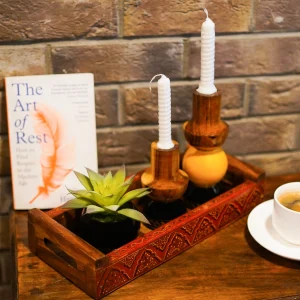
Step 2: Corral the Essentials. Salt cellars, napkins, a small vase: left loose, these read as mess. Grouped on a small wooden tray, the same items become a deliberate vignette. The wood grounds them, and the grouping does the rest.
Step 3: Quiet the Dining Experience. Metal cutlery against ceramic has a sharp, repetitive clink that most people tune out until it’s gone. Swap in wooden serving pieces and the table gets quieter almost immediately. The food doesn’t change. The soundscape does.
- Woven tray beneath a serving bowl to mark a clear zone on the table
- Small wooden tray to group salt, napkins, and a vase into one vignette
- Wooden serving cutlery in place of metal, particularly for salads and bread
The Slow Dining Payoff
Set a dining table with natural, handcrafted materials and the pace of the meal tends to shift with it. Phones go down. Conversations stretch a little longer. The texture in front of you asks for more attention than a bare glass surface ever did.
None of this requires new furniture or a redesign. It requires choosing pieces that were shaped by hand rather than stamped out by machine, and letting a few of them replace what’s already on the dining table.
Factory copies of wood and woven texture photograph fine. Pick one up and the gap shows fast: lighter than it should be, a grain that looks printed rather than grown, a weave that frays after a few washes. None of that shows up in a product photo. It shows up on your table three weeks in.
Bringing It Together
None of this needs a renovation. Swap a few cold surfaces for ones with real grain and weight, and the room does the rest.
Ready to make that shift? The artisan collections at Udaari Crafts are a good place to start, with pieces made the slow way instead of stamped out by the thousand.