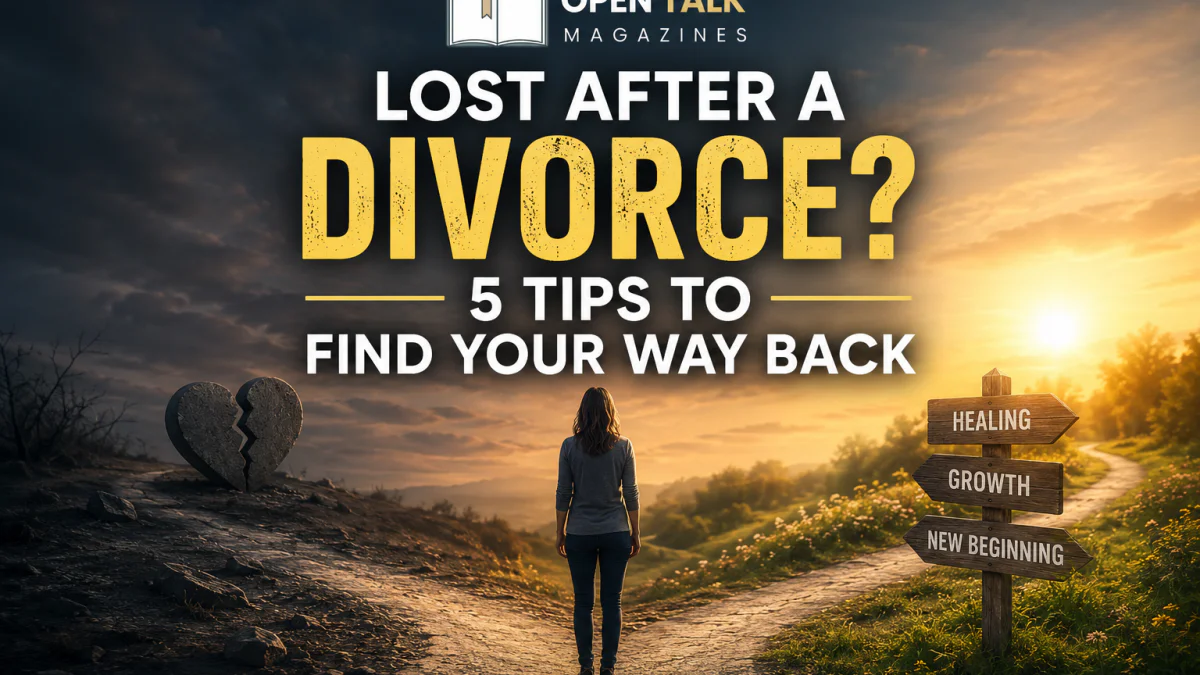
Divorce can leave you with a strange question that nobody prepared you for: “Who am I now?”
The legal process may eventually end, the boxes may be unpacked, and the paperwork may be filed. Yet your emotional life may still feel unsettled. You may wake up in a quiet house, look at your calendar, and realize that the future you once imagined is no longer the future you are living.
That feeling does not mean you made the wrong decision.
For many Americans, divorce represents much more than the end of a marriage. It can change where you live, how you spend your evenings, your finances, friendships, parenting arrangements, family traditions, and even your sense of identity.
The U.S. Substance Abuse and Mental Health Services Administration recognizes divorce as one of the life experiences that can trigger grief. Grief can involve sadness, anger, confusion, anxiety, loneliness, helplessness, sleep changes, and other emotional or physical reactions.
Table of Contents
Why Do You Feel Lost After Divorce?
Feeling lost after divorce can happen even when you were the person who wanted the marriage to end.
Imagine a woman named Sarah. She is 43, lives in Ohio, and has two teenage children. After years of conflict, she finally decides that divorce is necessary.
At first, she feels relieved.
Then the reality arrives.
Saturday mornings become quiet. She no longer knows what to do with the time she once spent managing a household with another person. Friends she shared with her former spouse become less available. Her children move between homes. Even grocery shopping feels different.
One evening, Sarah realizes something uncomfortable: she is not necessarily missing her marriage. She is missing the life structure that came with it.
That distinction can matter.
A person can know that divorce was the right decision and still grieve the relationship, the routine, the family structure, or the future they expected.
Current Reddit discussions show a similar concern. People who have already completed divorce frequently ask how to build a new life, make friends, handle loneliness, establish routines, and rediscover themselves.
Is It Normal to Feel Lost After Divorce?
Yes. Feeling lost after divorce can be a normal response to a major life transition.
You may experience sadness one day and relief the next. You may feel confident in the morning and lonely at night. You may even feel guilty for enjoying yourself.
There is no universal emotional timeline for divorce recovery.
SAMHSA explains that grief is highly individual and does not follow a perfectly predictable pattern. People can experience different emotions at different times depending on their circumstances, support system, resources, and coping strategies.
That means you should not judge your progress by someone else’s timeline.
If your friend started dating six months after divorce, that does not mean you should. If another person needed several years to feel emotionally settled, that does not mean you will need the same amount of time.
Your recovery is your own.
5 Tips to Find Yourself Again After Divorce
1. Rebuild Your Daily Routine Before Rebuilding Your Whole Life
After divorce, it is tempting to think you need a dramatic transformation.
You may think about moving to another state, changing careers, dating again, renovating your entire home, or completely reinventing yourself.
Sometimes a much smaller beginning works better.
Start with your ordinary day.
Wake up at a consistent time. Eat regular meals. Take a walk. Make your bed. Handle one important task. Call someone you trust. Give yourself something to look forward to.
These actions may sound simple, but they create structure when everything else feels uncertain.
SAMHSA recommends establishing routines and paying attention to sleep and daily structure when people are dealing with intense emotional stress.
For someone recovering from divorce, routine can become an anchor.
You do not need to figure out your entire future today.
You only need to make today manageable.
2. Learn to Be Alone Without Treating Loneliness as Failure
One of the hardest parts of divorce can be learning how to spend time alone.
The quiet can feel enormous.
You may eat dinner alone, sleep alone, watch television alone, or walk into a home where nobody is waiting for you.
A recent Reddit discussion from a divorced woman in her 50s described exactly this struggle. She had friends but still found eating, sleeping, and going out alone emotionally difficult. Other people responding to her emphasized gradually becoming comfortable doing things independently and creating opportunities for regular activities and social connection.
This is an important distinction: being alone and being isolated are not the same thing.
After divorce, try making alone time intentional rather than treating it as evidence that something is wrong with you.
Have coffee at a café. Go for a morning walk. Visit a museum. Take yourself to lunch. Read somewhere outside your home. Join a class.
You are teaching yourself that your own company can become familiar again.
3. Reconnect With the Person You Were Before the Marriage
Divorce can expose something many people do not realize until later: they may have spent years organizing their identity around their spouse and family.
You may have stopped doing things you loved.
Maybe you used to paint. Maybe you played guitar. Maybe you loved hiking, photography, gardening, cooking, travel, fitness, or reading.
Now is not the time to ask whether the activity is impressive.
Ask whether it feels like you.
A Reddit user who had been divorced for several years described rebuilding life through a new home, hobbies, outdoor activities, and taking better care of personal interests.
Another discussion about starting over after divorce emphasized rebuilding health, finances, lifestyle, friendships, and personal goals rather than immediately searching for another relationship.
That is an important lesson.
Your post-divorce life does not have to begin with another partner.
It can begin with you.
4. Create New Goals That Have Nothing to Do With Your Ex
After divorce, your mind can become stuck in the past.
You may replay conversations, analyze what went wrong, wonder whether your former spouse is happier, or compare your life with theirs.
One way to redirect that energy is to create goals that belong entirely to you.
Your first goal does not need to be enormous.
Maybe you want to walk three mornings a week. Maybe you want to save a certain amount of money. Maybe you want to take a course, improve your home, travel somewhere new, or develop a skill.
The important part is that the goal belongs to your future rather than your past.
A Reddit discussion from someone beginning life after divorce described wanting to rebuild health, finances, lifestyle, friendships, and a sense of community.
This is why starting over after divorce is often less about one giant decision and more about hundreds of small decisions.
5. Build a Support System Instead of Trying to Be Strong Alone
You do not have to handle divorce recovery completely by yourself.
Friends and family can provide emotional support, but you may also benefit from professional help if your emotions become difficult to manage.
A therapist can give you a place to talk honestly without having to protect anyone else’s feelings.
SAMHSA recommends reaching out for support when grief or emotional distress becomes difficult to manage. Its resources also point people toward mental health professionals, community support, and treatment services.
For people in the United States who need help finding mental health treatment, SAMHSA’s National Helpline and FindTreatment.gov can help connect people with services.
You should not interpret seeking therapy as proof that you are failing at divorce recovery.
Sometimes getting help is simply a practical decision.
What If You Still Miss Your Ex?
Missing someone does not automatically mean you should return to the relationship.
This can be one of the most confusing parts of divorce.
You may miss their voice, their cooking, their family, your old traditions, or simply having someone beside you.
You might even miss parts of the relationship while still knowing that the marriage was not healthy or sustainable.
Try separating the person from the life you had with them.
Ask yourself what you actually miss.
- Is it your former spouse?
- Is it companionship?
- Is it financial security?
- Is it family routine?
- Is it physical affection?
- Is it having someone to call at the end of the day?
Understanding the answer can help you address the real need rather than automatically assuming reconciliation is the solution.
What If You Feel Lonely Months or Years After Divorce?
There is no expiration date on difficult emotions after divorce.
A person can look completely fine from the outside and still feel deeply lonely.
A recent Reddit discussion involved someone whose divorce had been finalized about a year and a half earlier, yet the person’s grief had become more intense despite building a home, developing hobbies, and making future plans. The person was already working with a therapist but still felt misunderstood.
This is an important reminder that recovery is not always a straight line.
If loneliness is persistent, overwhelming, or affecting your ability to work, sleep, maintain relationships, or care for yourself, professional support may be appropriate.
SAMHSA notes that persistent changes such as withdrawing from usual activities, feeling hopeless, having difficulty performing daily tasks, or experiencing ongoing emotional distress can be warning signs that additional mental health support may be needed.
Should You Start Dating Again After Divorce?
There is no universal deadline for dating after divorce.
- Some people are ready relatively soon. Others need significant time before they feel comfortable meeting someone new.
- The better question is not, “How soon can I find another partner?”
- It is, “Am I emotionally ready to build something new without expecting another person to repair everything I am feeling?”
If you are still comparing every potential partner to your ex, using dating primarily to escape loneliness, or feeling emotionally exhausted by the idea of another relationship, you may benefit from giving yourself more time.
Being single after divorce is not a problem that must immediately be solved.
It can be a stage of rebuilding.
How Do You Find Yourself Again After Divorce?
Finding yourself after divorce does not usually happen through one dramatic breakthrough.
- It can happen when you begin making ordinary choices for yourself again.
- You choose the restaurant you actually like.
- You decorate your home according to your taste.
- You call an old friend.
- You take the class you always wanted to take.
- You learn how to manage your finances independently.
- You spend a Saturday doing something simply because you enjoy it.
- Little by little, these choices create a new identity.
A Reddit discussion about rebuilding after divorce described this process as creating a new life rather than simply surviving the end of the old one.
That may be the most useful way to think about life after divorce.
You are not necessarily trying to return to the person you were before marriage.
You are discovering who you are now.
When Should You Get Professional Help?
Sadness, loneliness, anger, confusion, and grief can occur after divorce.
But if emotional distress becomes persistent or seriously interferes with daily life, professional help can make a meaningful difference.
Consider talking with a qualified mental health professional if you are struggling to function at work, withdrawing from everyone, experiencing persistent hopelessness, relying heavily on alcohol or drugs to cope, or finding that emotional pain is becoming increasingly difficult to manage.
If you are in the United States and experiencing a mental health crisis or thoughts of suicide, call or text 988 for the Suicide & Crisis Lifeline. SAMHSA also provides treatment-finding resources for mental health and substance-use concerns.
Getting help does not mean you are weak.
It means you do not have to carry everything alone.
Final Thoughts
Divorce can feel like an ending, but it can also become the beginning of a life that is more intentional and more closely connected to who you are.
You may not feel hopeful today.
That is okay.
You do not have to love your new life immediately. You do not have to know who you will become. You do not have to start dating, move across the country, or completely reinvent yourself.
- Start smaller.
- Build a routine.
- Reconnect with people.
- Try something you once enjoyed.
- Create one new goal.
- Learn to spend time with yourself.
- And when the emotional weight becomes too difficult to carry alone, ask for help.
- The goal after divorce is not to erase your past.
- It is to build a future that no longer depends on it.
Frequently Asked Questions
Q1: Is it normal to feel lost after divorce?
A1: Yes, feeling lost, lonely, sad, angry, relieved, or confused can be a natural response to the major life changes associated with divorce.
Q2: How long does it take to feel normal after divorce?
A2: There is no fixed timeline because divorce recovery varies according to personal circumstances, support, finances, children, emotional health, and the nature of the relationship.
Q3: How do I find myself again after divorce?
A3: Start by rebuilding your daily routine, reconnecting with interests and friendships, creating personal goals, and gradually becoming comfortable with your independence.
Q4: Why am I lonely after divorce even though I wanted it?
A4: You can feel confident that divorce was the right decision while still grieving companionship, routines, family structure, and the future you once expected.
Q5: Should I date again after divorce?
A5: There is no universal timeline for dating after divorce; consider whether you feel emotionally ready to build a new relationship rather than using dating only to escape loneliness.