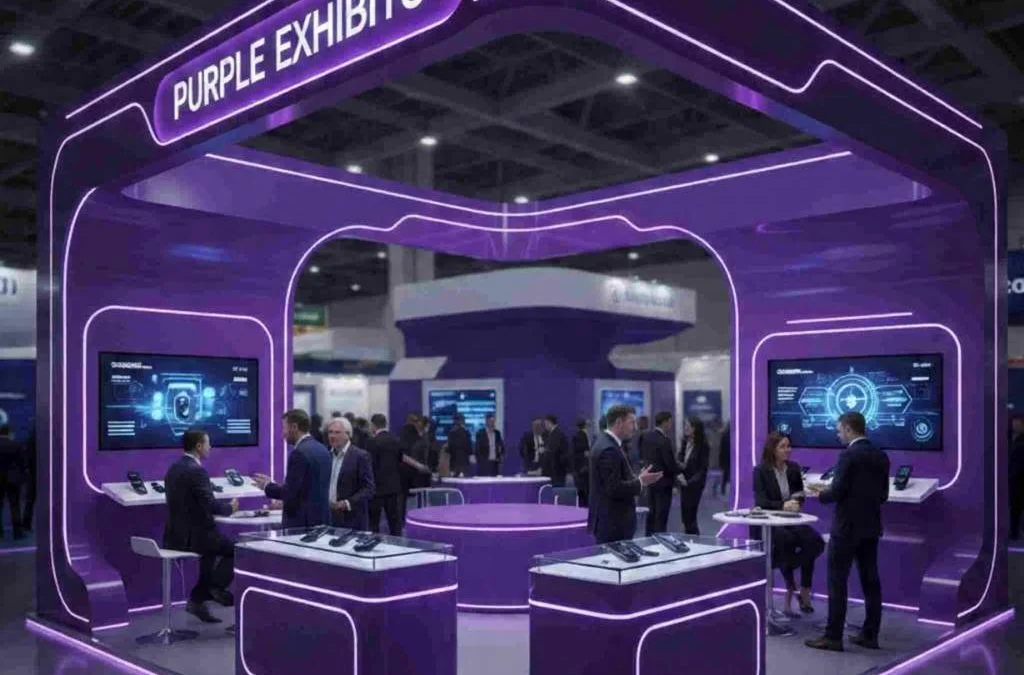
A successful trade show exhibit does not happen by accident. Behind every impressive booth is a detailed process that begins with an idea and continues through design, fabrication, transportation, installation, and event-day execution. Businesses that want to create a strong presence at exhibitions must understand that booth construction is not simply about building a structure. It is about creating a complete brand experience that supports marketing and sales objectives.
A high-impact trade show exhibit should attract attention, communicate a clear message, encourage visitor engagement, and provide a practical space for business conversations. Achieving these goals requires strategic planning and close coordination between the exhibiting company and its exhibit partner.
Starting With the Right Concept
Every successful exhibit begins with a clear concept. Before creating sketches or selecting materials, the design team should understand the company’s goals, audience, products, brand identity, and event requirements.
The concept should answer several important questions:
- What does the company want to achieve at the trade show?
- Who are the most important visitors?
- What products or services should receive the most attention?
- What message should visitors remember?
- How should the booth support sales conversations?
- What type of experience should visitors have?
For example, a company launching a new product may need a demonstration-focused booth. A business looking to meet distributors may require meeting rooms and product presentation areas. A company entering a new market may focus more on brand awareness and clear messaging.
The concept should be designed around these goals rather than simply copying a competitor’s booth.
Understanding the Exhibition Space
The available booth space has a major influence on the design. A small inline booth requires a different approach from a large island or peninsula exhibit.
Before planning the layout, the exhibit team should review:
- Booth dimensions
- Height restrictions
- Ceiling and hanging sign rules
- Electrical access
- Lighting requirements
- Fire and safety regulations
- Flooring conditions
- Loading and unloading restrictions
- Venue-specific guidelines
- Neighboring booth locations
Ignoring these details can lead to design changes, additional costs, or delays during installation.
A professional exhibit partner should review the show manual and coordinate with the venue whenever necessary. This ensures that the design is both creative and practical.
Developing the Booth Design
Once the concept and space requirements are understood, the design team can develop the booth layout. This stage usually includes floor plans, elevations, material suggestions, graphics, furniture placement, and visitor flow.
A well-designed exhibit should include a balance of open space, product displays, branding, and interaction areas.
Common booth zones include:
- Brand Visibility Area
This area communicates the company name, logo, and primary message. It should be visible from the aisle and from different directions when possible.
- Product Display Area
Products should be presented in a way that makes them easy to see, understand, and explore. Important products may need additional lighting or dedicated display structures.
- Demonstration Area
This space allows staff to explain products or services through live demonstrations, videos, models, or digital presentations.
- Meeting Area
Comfortable seating helps staff conduct professional conversations with qualified prospects and existing customers.
- Storage Area
Storage keeps personal belongings, packaging, brochures, and promotional items organized and out of sight.
The layout should also provide enough room for visitors and staff to move comfortably without creating congestion.
Using 3D Visualization Before Production
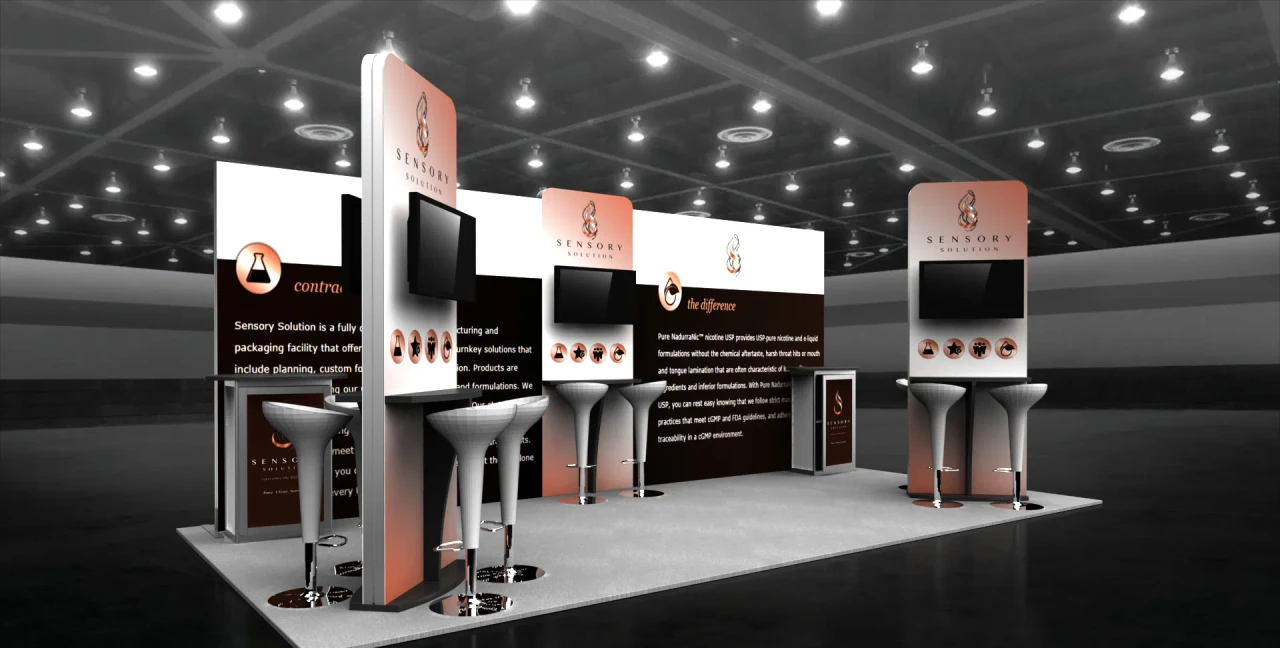
3D visualization is a valuable part of the exhibit design process. It allows businesses to review how the booth may look before fabrication begins.
A 3D design can help demonstrate:
- Booth proportions
- Branding placement
- Graphic visibility
- Product positioning
- Lighting effects
- Furniture arrangement
- Meeting room placement
- Material finishes
- Visitor movement
This gives the client an opportunity to provide feedback early. Changes made during the design stage are generally easier to manage than changes made after fabrication has started.
A detailed 3D rendering also helps different teams understand the same concept. The client, designer, fabricator, and installation team can work from a shared visual reference.
Selecting the Right Materials
Material selection affects the booth’s appearance, durability, weight, transportation requirements, and budget.
Depending on the design, an exhibit may include:
- Laminated panels
- Wood structures
- Aluminum framing
- Acrylic elements
- Fabric graphics
- Metal finishes
- Glass features
- LED lighting
- Printed panels
- Reusable modular components
The right materials should support the brand image and the practical needs of the exhibition. A premium brand may require polished finishes and elegant details, while a company attending multiple events may benefit from reusable and adaptable components.
Material selection should also consider installation time and future reuse. A booth that can be reconfigured for different spaces may provide greater long-term value.
Creating Graphics That Communicate Clearly
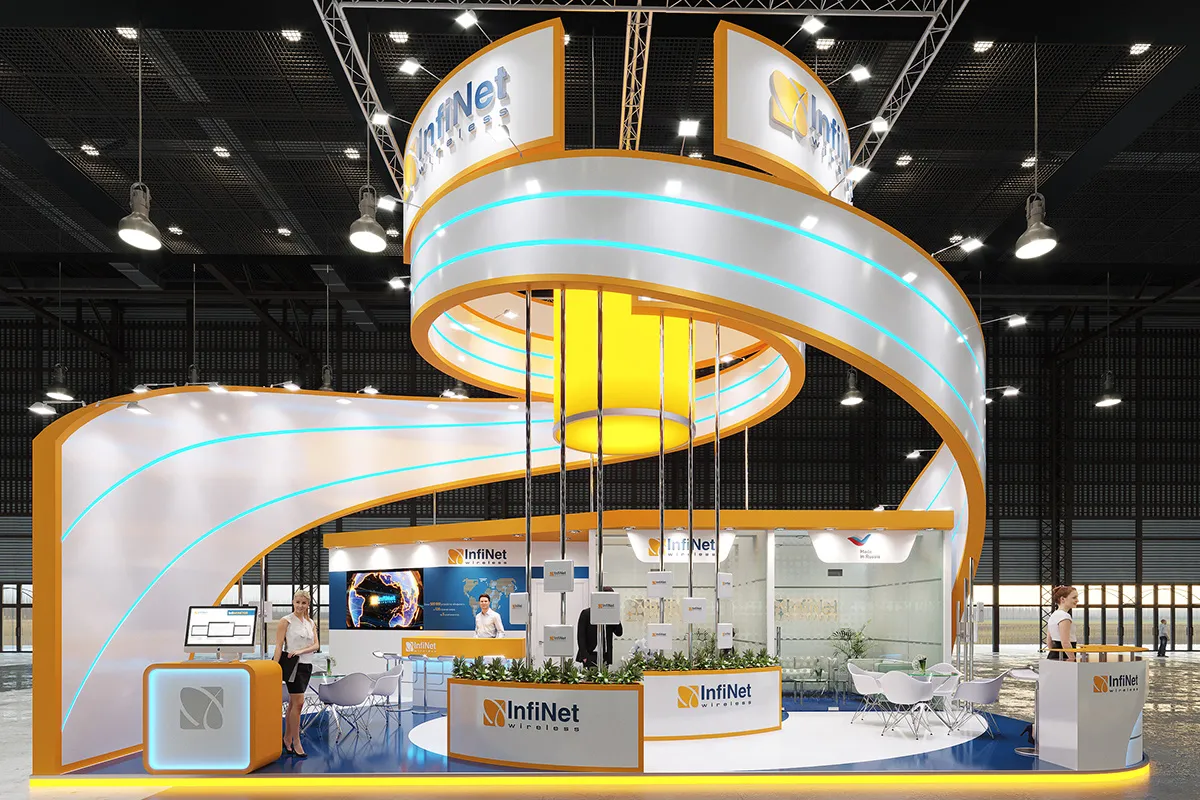
Graphics are one of the most visible elements of a trade show exhibit. They should attract attention while making the company’s offering easy to understand.
Effective booth graphics often include:
- A clear headline
- Strong brand visibility
- Relevant product images
- Short benefit statements
- Supporting statistics or features
- A simple call to action
- QR codes or contact details
Graphics should be readable from a distance. Large walls should not be filled with lengthy paragraphs or complicated information.
The messaging should focus on customer benefits rather than only describing company features. Visitors should quickly understand how the product or service can help them.
Fabrication and Quality Control
After the design is approved, the booth moves into fabrication. This stage involves converting drawings and visual concepts into physical structures and display elements.
Quality control is important during this process. The fabrication team should check:
- Structural stability
- Material quality
- Graphic accuracy
- Lighting installation
- Electrical requirements
- Product display safety
- Furniture quality
- Branding consistency
- Fit and finish
A small error in production can affect the final appearance of the booth. Careful inspection before shipping helps reduce the risk of missing components or last-minute corrections at the venue.
Logistics and Transportation
Trade show exhibits often need to travel long distances before reaching the exhibition venue. Proper logistics planning helps ensure that every component arrives safely and on time.
Important logistics considerations include:
- Packaging and labeling
- Transportation schedules
- Advance warehouse deadlines
- Direct-to-show delivery
- Material handling
- Freight coordination
- On-site receiving
- Return shipping
Each component should be labeled clearly so that the installation team can identify it quickly. Missing or damaged items can create serious problems during setup.
An experienced exhibit partner can coordinate shipping and help manage venue deadlines, reducing pressure on the exhibiting company.
Installation and Show-Day Preparation
Installation is the stage where the concept becomes a finished exhibit. The installation team assembles the structure, installs graphics, arranges furniture, connects lighting, and prepares displays.
A professional installation process should include:
- Delivery coordination
- Booth space inspection
- Structural assembly
- Graphic installation
- Lighting and electrical setup
- Furniture placement
- Product display arrangement
- Final cleaning
- Safety inspection
- Client walkthrough
The booth should be completed before the show opens. A final walkthrough allows the client to check branding, product placement, lighting, and staff readiness.
Measuring Exhibit Performance
The success of a trade show exhibit should be measured after the event. Useful performance indicators may include:
- Number of booth visitors
- Qualified leads
- Product demonstrations
- Meetings scheduled
- Sales opportunities created
- Customer feedback
- Social media engagement
- Follow-up appointments
- New partnerships
These insights can help improve future exhibitions. If visitors were attracted but did not engage, the booth may need stronger messaging or better staff interaction. If meetings were successful but the booth felt crowded, the layout may need adjustment.
Conclusion
Building a high-impact trade show exhibit company Tampa requires much more than attractive construction. It involves research, concept development, strategic design, quality fabrication, reliable logistics, professional installation, and post-event analysis.
When every stage is managed carefully, the exhibit becomes a powerful tool for brand communication and business development. It can attract the right audience, support meaningful conversations, and create opportunities that continue after the exhibition ends.
Purple Exhibits offers complete trade show exhibit solutions, including custom booth design, fabrication, graphics, logistics, installation, and dismantling. To discuss your next project, contact Purple Exhibits at (800) 994-8030 or email info@purpleexhibits.com.