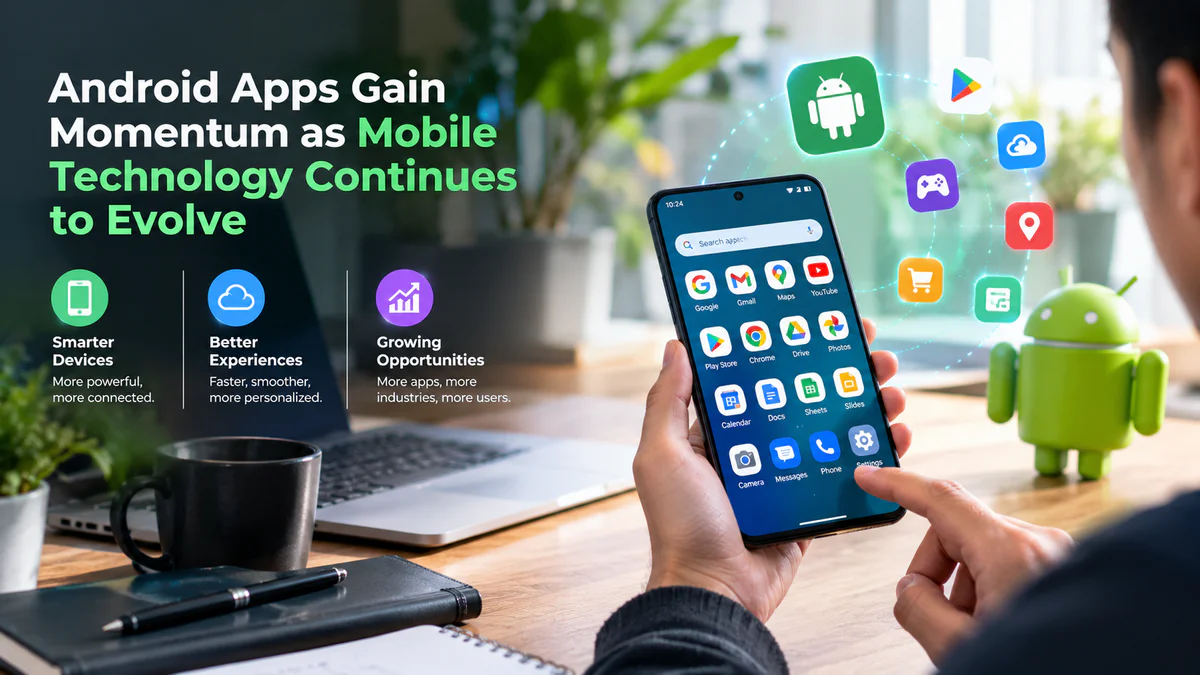
Tariq Hassan had been skeptical about Android’s enterprise potential for years. As head of IT infrastructure at a regional bank in Riyadh, he had watched his institution adopt BlackBerry, then reluctantly move to a managed iOS environment, and build its mobile banking operations around the assumption that iPhone was the enterprise standard and Android was what everyone else used. That assumption had always been a reasonable shorthand for a specific demographic: the tech-forward, high-income professional whose device preferences had historically been shaped by Western consumer culture and whose banking relationship was worth the premium that iOS-first development implied. It stopped being reasonable the moment Tariq’s bank began seriously pursuing financial inclusion for the segments of Saudi Arabia’s population whose smartphone environment was predominantly Android. A microfinance product designed to extend credit to small business owners, a digital wallet for domestic workers sending remittances, and a savings product for young adults entering the workforce for the first time: every one of these products needed to meet users where they were, and where they were was Android, across a diverse range of device tiers that made Android’s hardware heterogeneity a design requirement rather than a complication to minimize. When Tariq finally engaged an Android app development company to build the bank’s inclusion-focused product suite, the experience changed not just the products but the way he thought about the platform itself. Android was not the compromise position for users who couldn’t afford Apple. It was the platform through which his bank’s most ambitious social mission would reach the people it was designed to serve. That reframe, from Android as the fallback to Android as the primary platform for genuine scale, is the reframe that mobile technology’s continuing evolution is pressing organizations across every sector to make.
The Evolution That Has Changed Android’s Position
Android’s position in the mobile landscape has evolved significantly across the platform’s seventeen-year history, and the evolution has not been linear. The early Android releases, fragmented across manufacturers with inconsistent update cadences and widely varying quality of user experience, established a reputation for inconsistency that iOS’s controlled hardware environment was spared. That reputation has been systematically addressed through a combination of Google’s Project Treble modular architecture, which separated the Android OS from manufacturer customizations and accelerated update delivery, the Android Enterprise program that brought device management and security capabilities to enterprise requirements, and the steady elevation of the Android Go edition that brought responsive performance to entry-level hardware.
The Google Pixel line, which Google controls from hardware to software as its reference Android implementation, has provided a quality benchmark that has influenced the broader Android ecosystem. The Tensor chip series embedded in Pixel hardware has enabled on-device AI capabilities that showcase what Android can do when the hardware-software integration is as deliberate as it is on competing platforms.
The result of that evolution is a platform that the enterprise technology community, which had spent a decade treating iOS as its default mobile standard, is now evaluating on its technical merits rather than against a reputation formed from a substantially earlier platform state.
AI Integration as Android’s Current Momentum Driver
The most significant source of Android’s current momentum in 2026 is the platform’s integration of AI capabilities at a depth and accessibility that is changing what developers can build and what users can experience without leaving the native application environment.
Google’s on-device AI infrastructure, delivered through the Gemini Nano model running directly on device without network dependency, has made conversational AI assistance available within applications in a way that doesn’t require the developer to build and host their own language model infrastructure. An Android application that needs to provide a natural language interface for complex user queries, generate draft content from structured input, or summarize lengthy documents can invoke that capability through a system-level API rather than building the capability from scratch.
The ML Kit framework, which provides ready-to-use machine learning capabilities including text recognition, face detection, object detection, pose estimation, and language identification, has lowered the integration barrier for computer vision features to a level where a small development team can build capabilities that would previously have required a machine learning engineering team. An Android application that needs to scan and parse a handwritten form, detect whether a user is performing an exercise movement correctly, or identify a product from a camera image has the building blocks for those features available through a well-documented SDK rather than through a custom model development process.
Large Screen and Foldable as the Next Platform Frontier
Android’s expansion beyond the smartphone form factor into large screen tablets, convertible Chromebooks, and foldable devices represents the platform’s most significant hardware evolution since the smartphone itself, and it is creating application development opportunities that Google has been actively investing in making accessible through developer tooling and framework support.
The Samsung Galaxy Z Fold series, the Google Pixel Fold, and the expanding field of competing foldable devices running Android have established a device category that serves a specific user need: a device that is phone-sized when it needs to be and tablet-sized when the task benefits from more screen real estate. Applications that recognize which configuration the device is in and adapt their interface to take advantage of the available screen real estate are delivering experiences that the single-size-fits-all approach of conventional phone applications cannot provide.
The Jetpack WindowManager library, which exposes the fold state, hinge position, and display configuration to application code, and the adaptive layout frameworks in Jetpack Compose that make multiple layout breakpoints manageable within a single codebase, have made foldable-optimized development accessible to teams that are not building exclusively for high-end hardware. The investment in foldable support is increasingly justified not only by foldable device sales but by the fact that the same adaptive layout techniques that serve foldables produce applications that also scale gracefully to Android tablets, which represent a growing share of educational and enterprise device deployments.
Development and Testing in the Modern Android Ecosystem
The development tooling that supports Android application development has kept pace with the platform’s evolution, and one of the most practically significant improvements for development teams is the accessibility of high-quality testing environments that reduce the dependency on physical device inventories during the development and pre-release phases.
For developers evaluating the best Android emulators for PC and Mac, Android Studio’s built-in Android Virtual Device manager provides the most deeply integrated option, with emulator profiles that cover the full range of API levels, screen sizes, and hardware configurations that production devices represent. The resizable emulator, introduced alongside the large screen and foldable initiatives, allows developers to simulate fold state transitions, multi-window configurations, and different window size classes without requiring physical foldable hardware. For teams that need to test across more configurations than a local development environment can efficiently support, Firebase Test Lab provides cloud-hosted physical device testing at scale, running automated test suites against real hardware in Google’s device farm.
The combination of emulator-based development testing and cloud-hosted physical device testing covers the majority of compatibility validation needs for most Android applications. Physical device testing remains important for hardware-specific features including camera behavior, Bluetooth stack interactions, and manufacturer-specific notification handling, but the proportion of testing that requires physical device access has decreased substantially as emulator fidelity has improved.
The Security Architecture That Enables Enterprise Confidence
One of the persistent barriers to Android adoption in enterprise environments has been the perception that iOS’s closed hardware ecosystem provides an inherently more controllable security posture than Android’s open ecosystem. That perception, while not unfounded in Android’s earlier state, underestimates how significantly Android Enterprise has changed the security calculus for managed device deployments.
Android Enterprise provides the management framework that gives IT administrators the controls they need to deploy applications to managed devices, enforce security policies on work profiles, remotely wipe corporate data from lost or compromised devices, and manage application installations through a private managed Google Play environment rather than through the public store. The work profile architecture, which creates an isolated container for work applications and data on personally owned devices, allows employees to use their personal Android devices for work without giving the employer management control over personal data and applications.
For Tariq’s bank, the enterprise security requirements of its regulated financial services environment were met through Android Enterprise enrollment with a mobile device management platform that enforced specific security policies on devices used to access customer financial data. The security architecture was not a workaround for Android’s limitations. It was a purpose-built enterprise capability that Android had developed specifically for the requirements of organizations with regulatory data protection obligations.
Android’s Role in Emerging Technology Integration
Android’s position as the platform with the largest global installed base and an open architecture that facilitates hardware innovation has made it the primary platform for several emerging technology categories whose commercial applications are still being defined.
Extended reality experiences, which encompass both augmented reality applications delivered through standard smartphone cameras and more immersive experiences delivered through standalone headsets running Android-derived operating systems, are being developed primarily on Android because the hardware ecosystem that makes those experiences possible is predominantly Android-based. The ARCore framework that provides the AR foundation for Android devices has enabled a growing category of commercial applications in retail visualization, industrial maintenance guidance, and spatial computing that are reaching users through Android hardware.
Automotive applications, delivered through Android Automotive OS which runs natively in vehicles from manufacturers including Polestar, Renault, and Volvo, are extending the Android development ecosystem into a connected vehicle category that represents a significant future application surface for developers with existing Android expertise. An Android developer building a navigation, entertainment, or vehicle management application for the automotive context is working with a familiar development environment adapted for a new hardware category rather than learning a platform from scratch.
What Tariq’s Bank Built and Why It Mattered
Tariq’s bank launched three Android-first financial products in the eighteen months following the infrastructure decision that changed how it thought about the platform. The microfinance product reached 47,000 borrowers in its first year, 91% of whom were first-time formal credit users. The digital wallet for domestic workers processed 2.3 million remittance transactions in the same period. The youth savings product attracted 28,000 accounts from users between 18 and 25 whose demographic profile the bank had never successfully served through its existing channel mix.
None of those outcomes were achievable through the bank’s iOS-first product strategy, because the users those products were designed to serve were not iOS users. They were Android users on mid-range and budget hardware whose financial services access had been limited by an industry assumption that mobile banking was for the demographic that happened to use the same platform as the people making the industry’s product decisions. Android’s evolution as a platform had made it capable of delivering the security, performance, and feature depth that financial services applications require. What changed was the willingness to build for the platform’s actual user population rather than for the platform that the industry had historically found easier to recognize as capable. The momentum that Android applications are gaining in 2026 is, in many cases, the momentum of that recognition finally arriving.