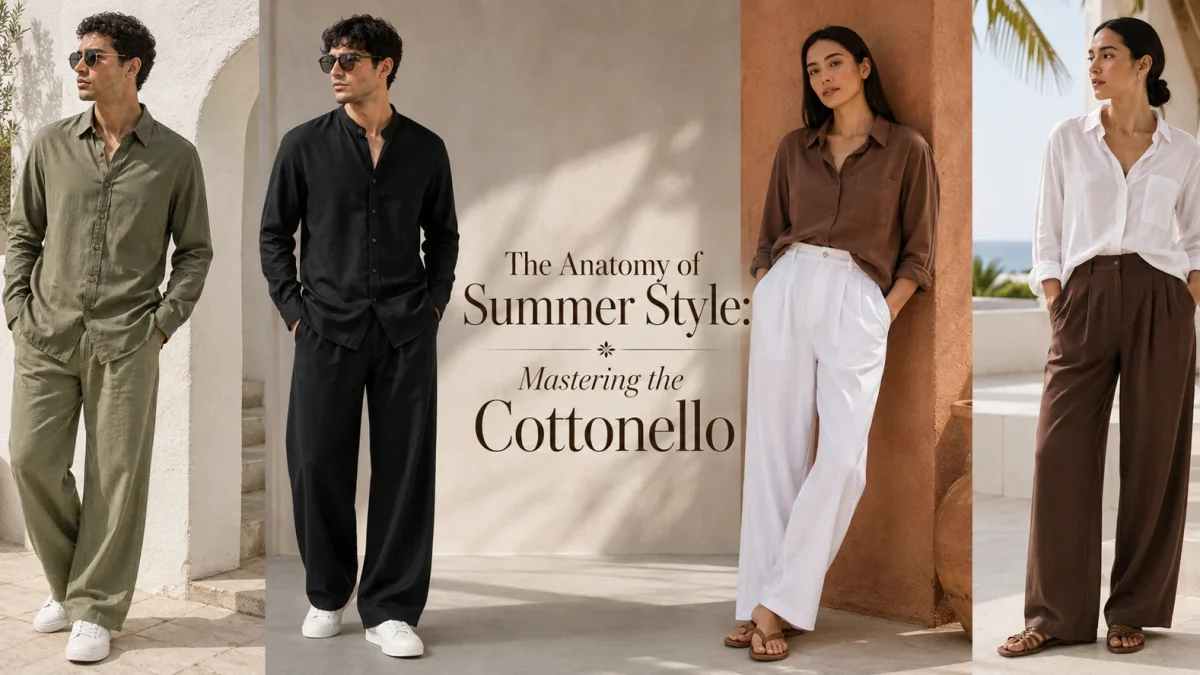
It’s a small thing, easy to miss until you notice it everywhere: fewer stiff collars, fewer heavy blends, more room through the leg and across the shoulders. Summer tailoring is being rebuilt from the ground up, driven less by fashion cycles than by simple discomfort, the kind that comes from wearing the wrong fabric on the wrong commute.
At the center of that shift sits an unglamorous idea: a good linen collection, chosen properly, solves more of the problem than any single trend does.
The Balance of the Blend: Rethinking Lightweight Fabrics
Every fabric solves one problem and creates another. The two most common summer staples make that trade-off in opposite directions.
The Case for Linen
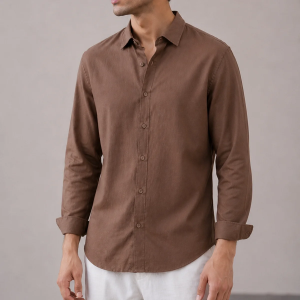
Nothing breathes quite like linen. Its open weave moves air across the skin in a way few other natural fibers can match, which is exactly why it became the default answer to “what do I wear when it’s hot.” The tradeoff shows up fast: linen creases under its own weight, and a shirt that looked sharp leaving the house can look slept-in by the time a meeting starts.
For a lot of people, that’s reason enough to leave pure linen shirts for the weekend and reach for something sturdier on a workday.
The Case for Cotton
Standard cotton shirts solve the opposite problem. A tightly woven cotton shirt holds its shape through a full day, surviving sitting, standing, and the general wear of an office schedule without losing its line. What it doesn’t do particularly well is move air. In genuine heat, that structure starts to work against the wearer, trapping warmth rather than releasing it.
Neither fabric is wrong. Each is simply built for half the problem.
The Pivot: Where Blended Textiles Come In
The more interesting shift isn’t linen versus cotton; it’s the growing number of labels blending the two on purpose, in deliberate ratios, instead of leaving shoppers to choose one flawed option over another.
A few quick ways to spot whether a “summer fabric” is actually built for the job:
- Check the composition on the tag. A blend that leans cotton-heavy (rather than a 50/50 split) usually holds shape better through a full day.
- Crease-test it in your hand. Scrunch a corner of the fabric and let go. Natural linen blends will show some texture, but shouldn’t stay deeply wrinkled.
- Feel the weight, not just the texture. A fabric can look light and still trap heat if the weave is dense; genuine airflow is felt, not just seen.
This is the logic behind categories like wewear’s Cottonello collection, which is built around a 70% cotton, 30% linen split. The ratio is deliberate: enough cotton to resist deep creasing and hold a clean line through the day, enough linen to keep the breathability that made people reach for linen shirts in the first place.
It’s less a compromise than a recalibration, asking each fiber to do only the part it’s actually good at.
The Shift in Menswear: Structural Ease and the Relaxed Silhouette
Menswear’s version of this shift is visible in the silhouette itself. The ultra-slim, close-to-the-body cut that dominated the last decade is gradually giving way to something roomier, not baggy, just less restrictive through the leg and shoulder.
Front pleats are the clearest example of this recalibration in practice. Once dismissed as a dated detail, pleated linen pants are showing up again in modern tailoring for a straightforward reason: the extra fabric through the thigh gives the leg somewhere to go, which means the trouser drapes rather than clings, and moves air instead of trapping it against the skin.
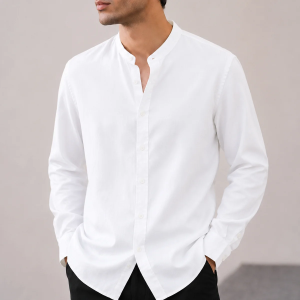
The pairing that’s proving most durable is relaxed
worn with a clean, lightweight band-collar shirt, a combination structured enough for a morning meeting and easy enough to carry into the evening without a change of clothes.
The Women’s Edit: Fluidity and Minimalist Layering
Women’s summer dressing carries its own specific problem: the gap between an outdoor heatwave and an aggressively air-conditioned office, often navigated multiple times a day. The solution isn’t more layers; it’s smarter ones.
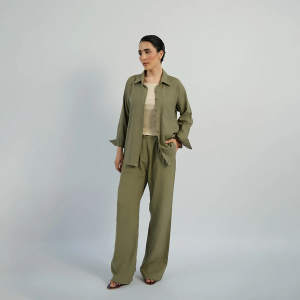
An unstructured button-down does most of the work here. A well-tailored linen shirt for women can be worn open over a simple tank for the commute, then buttoned and tucked the moment the setting turns more formal, one piece, two entirely different registers, with nothing extra to carry.
Paired underneath, fluid, wide-leg linen pants for women round out the look without adding bulk. The weight of a cotton-linen blend is what makes the wide cut work at all, heavy enough to hold its drape through a long day, light enough that it never fights the heat.
Investing in Longevity: The Modern Capsule Philosophy
None of this is really about chasing a seasonal trend. It’s a slower argument for buying fewer things that are actually engineered for the climate they’ll be worn in, rather than restocking synthetic basics that wear out literally and stylistically within a year.
True style in extreme heat isn’t about outrunning the next microtrend. It’s about building a small, functional foundation of pieces that work with the weather instead of constantly working around it.