
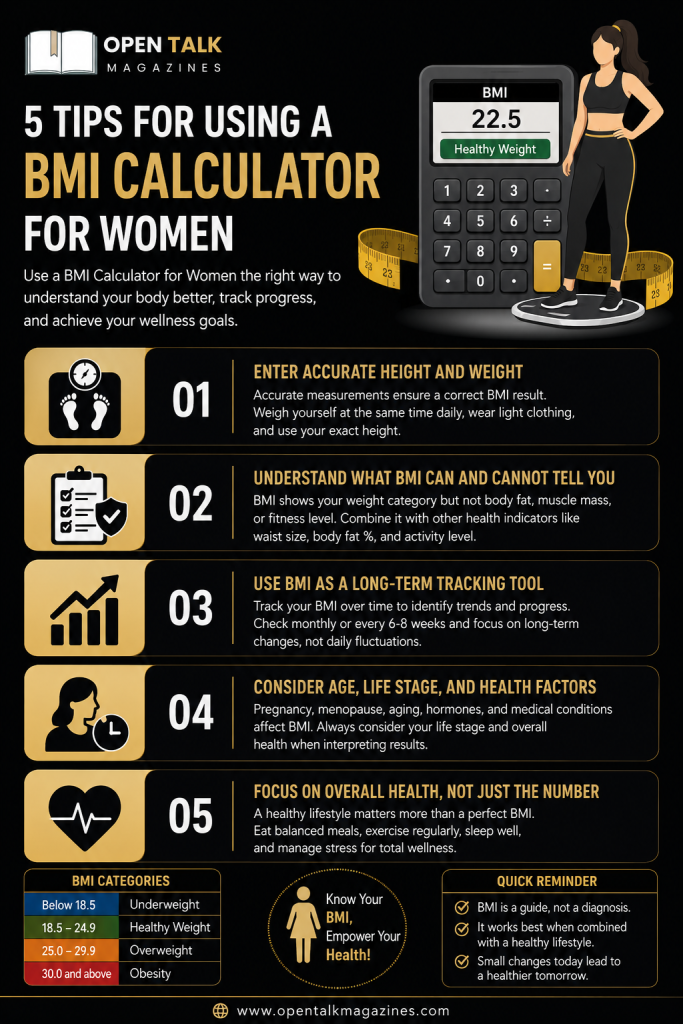
Maintaining a healthy weight is an important part of overall wellness, and one of the easiest ways to assess your weight status is by using a BMI Calculator for Women. Body Mass Index (BMI) is a simple measurement that compares your weight to your height, helping you determine whether you’re underweight, at a healthy weight, overweight, or obese.
While BMI is not a complete measure of health, it remains one of the most widely used screening tools for weight management and fitness tracking. However, many women use BMI calculators incorrectly or misunderstand the results, leading to confusion about their health goals.
In this guide from Open Talk Magazine, we’ll explore five essential tips for using a BMI Calculator for Women effectively so you can gain more accurate insights into your health and make informed lifestyle decisions.
Table of Contents
What Is a BMI Calculator for Women?
A BMI Calculator for Women is an online tool that calculates your Body Mass Index based on your height and weight. The formula helps estimate whether your body weight falls within a healthy range.
BMI Formula
BMI = Weight (kg) ÷ Height² (m²)
The resulting number is categorized as:
| BMI Range | Weight Category |
|---|---|
| Below 18.5 | Underweight |
| 18.5 – 24.9 | Healthy Weight |
| 25.0 – 29.9 | Overweight |
| 30.0 and above | Obesity |
Although the formula is the same for men and women, women often have different body composition, hormonal factors, and fat distribution patterns that can influence how BMI should be interpreted.
Tip 1: Enter Accurate Height and Weight Measurements
The accuracy of your BMI result depends entirely on the information you provide.
Best Practices
- Measure your weight using a reliable digital scale.
- Weigh yourself at the same time each day, preferably in the morning.
- Remove heavy clothing and shoes before weighing.
- Use your exact height instead of estimating.
- Double-check unit conversions between pounds, kilograms, feet, and centimeters.
Why Accuracy Matters
Even small errors can significantly affect your BMI score. For example, entering an incorrect height by just a few centimeters may shift your result from a healthy weight range to overweight.
A BMI Calculator for Women is only as accurate as the data entered, so taking precise measurements is the first step toward meaningful results.
Tip 2: Understand What BMI Can and Cannot Tell You
One common mistake women make is treating BMI as a complete assessment of health.
What BMI Can Tell You
- General weight category
- Potential health risks associated with weight
- Whether further health evaluation may be helpful
- Progress toward weight management goals
What BMI Cannot Tell You
- Body fat percentage
- Muscle mass
- Bone density
- Fitness level
- Metabolic health
- Fat distribution
For example, a woman who regularly strength trains may have a higher BMI due to increased muscle mass rather than excess body fat.
Consider Additional Measurements
For a more complete picture, combine your BMI results with:
- Waist circumference
- Body fat percentage
- Physical activity level
- Blood pressure readings
- Cholesterol levels
- Medical assessments
Using a BMI Calculator for Women alongside other health indicators provides a more balanced understanding of overall wellness.
Tip 3: Use BMI as a Long-Term Tracking Tool
Rather than checking your BMI once and forgetting about it, use it to monitor trends over time.
Benefits of Tracking BMI
- Helps identify gradual weight changes
- Supports weight loss goals
- Encourages healthy habits
- Tracks progress toward fitness objectives
- Provides motivation for lifestyle improvements
Create a Monitoring Schedule
Consider recording your BMI:
- Monthly
- Every 6-8 weeks
- At the start of a fitness program
- During major lifestyle changes
Avoid checking too frequently. Daily fluctuations in weight are normal and often caused by:
- Water retention
- Hormonal changes
- Salt intake
- Menstrual cycles
- Stress levels
Long-term trends are much more meaningful than short-term changes.
Tip 4: Consider Age, Life Stage, and Health Factors
Women’s bodies change throughout life, which can influence weight and body composition.
Life Stages That Affect BMI Interpretation
Pregnancy
BMI calculations are generally not intended for pregnant women because healthy weight gain is expected throughout pregnancy.
Menopause
Hormonal changes during menopause may lead to:
- Increased body fat
- Slower metabolism
- Changes in fat distribution
Aging
As women age, muscle mass naturally declines while body fat may increase, even when weight remains stable.
Other Factors to Consider
- Genetics
- Hormonal conditions
- Thyroid disorders
- Medical conditions
- Medications
- Activity levels
A BMI Calculator for Women offers valuable guidance, but individual circumstances should always be taken into account.
Tip 5: Focus on Overall Health, Not Just the Number
Many women become overly focused on achieving a specific BMI score. While maintaining a healthy BMI can be beneficial, true wellness extends beyond a single measurement.
Healthy Lifestyle Habits to Prioritize
Balanced Nutrition
Focus on:
- Fruits and vegetables
- Lean proteins
- Whole grains
- Healthy fats
- Proper hydration
Regular Exercise
Aim for a combination of:
- Cardiovascular exercise
- Strength training
- Flexibility exercises
- Daily movement
Quality Sleep
Adequate sleep supports:
- Hormone regulation
- Weight management
- Energy levels
- Recovery
Stress Management
Chronic stress can impact:
- Appetite
- Weight gain
- Hormone balance
- Overall health
The goal should be building sustainable healthy habits rather than obsessing over a BMI number.
Common BMI Calculator Mistakes Women Should Avoid
When using a BMI Calculator for Women, avoid these common errors:
- Entering inaccurate measurements
- Comparing your BMI to others
- Ignoring muscle mass differences
- Checking BMI too frequently
- Using BMI as the sole health indicator
- Becoming discouraged by small fluctuations
- Neglecting professional medical advice
Avoiding these mistakes helps ensure your BMI results remain useful and actionable.
Benefits of Using a BMI Calculator for Women
A reliable BMI calculator offers several advantages:
Quick and Convenient
Results are available instantly with just height and weight measurements.
Supports Weight Management
BMI helps identify whether weight changes may be needed.
Encourages Health Awareness
Understanding your BMI can motivate healthier lifestyle choices.
Tracks Progress
Monitoring BMI over time can reveal long-term improvements.
Free and Accessible
Most online BMI calculators are easy to use and available at no cost.
Final Thoughts
A BMI Calculator for Women is a simple yet effective tool for understanding weight status and supporting health goals. However, the most accurate approach involves using BMI alongside other health measurements and lifestyle assessments.
By entering accurate data, understanding BMI limitations, tracking changes over time, considering individual health factors, and focusing on overall wellness, women can use BMI calculators more effectively and make smarter decisions about their health.
At Open Talk Magazine, we encourage readers to view BMI as one piece of the wellness puzzle rather than the ultimate measure of health. Combine it with balanced nutrition, regular exercise, quality sleep, and professional medical guidance to create a healthier and more sustainable lifestyle.
FAQs
Q1: Is BMI Accurate for Women?
A1: BMI provides a useful general screening tool but does not measure body fat directly. It should be used alongside other health indicators.
Q2: What Is a Healthy BMI for Women?
A2: A BMI between 18.5 and 24.9 is generally considered healthy for most adult women.
Q3: Can Athletes Have a High BMI?
A3: Yes. Women with significant muscle mass may have a higher BMI despite having low body fat levels.
Q4: How Often Should Women Check Their BMI?
A4: Monthly or every few months is usually sufficient for tracking long-term health trends.
Q5: Should BMI Be Used During Pregnancy?
A5: No. Standard BMI calculations are not designed for pregnant women.