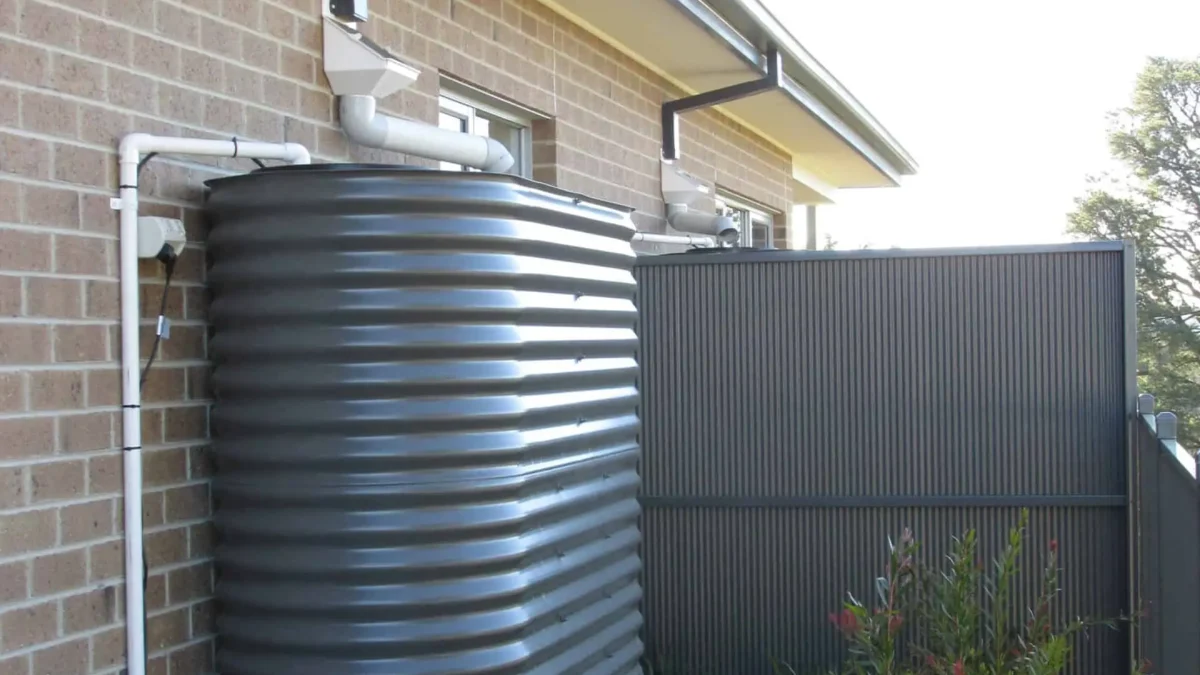
Rainwater harvesting has become increasingly popular across Australia, and for good reason. With unpredictable rainfall patterns and rising water costs, more homeowners are looking for smart ways to capture and store rainwater. Slimline steel tanks offer an ideal solution, particularly for those with limited outdoor space. These clever tanks fit snugly against walls, down narrow side passages, and in tight corners where traditional round tanks simply won’t work.
We will explore everything you need to know about slimline steel tanks for rainwater harvesting. You’ll discover why steel outperforms plastic, how to calculate the right tank size for your property, and what to expect in terms of lifespan and maintenance. We’ll also tackle common questions about drinking rainwater and help you choose the best tank for your specific needs. Whether you’re a first-time buyer or upgrading your existing setup, this guide will give you the confidence to make an informed decision.
Why Choose Slimline Steel Tanks Over Plastic for Rainwater Storage?
Durability and Longevity of Steel Tanks
When it comes to rainwater storage, the material you choose matters enormously. Steel tanks are built to withstand Australia’s harsh climate conditions, from scorching summers to heavy storms. Unlike plastic alternatives, steel doesn’t become brittle over time or degrade under constant UV exposure.
Quality steel tanks feature protective coatings that shield against corrosion and rust. This means your investment stays in top condition for decades, not just years. Many homeowners find that their steel tank still looks great and functions perfectly after twenty-five years or more.
The structural integrity of steel also means these tanks can handle significant water pressure without warping or bulging. This is particularly important for larger capacity tanks where water weight puts considerable stress on the tank walls.
Environmental Benefits of Choosing Steel
Steel is one of the most recyclable materials on the planet. At the end of its very long life, your steel tank can be completely recycled and turned into new products. This closed-loop sustainability makes steel an eco-friendly choice for environmentally conscious homeowners.
Plus, steel tanks don’t leach chemicals into your stored water. This gives you peace of mind knowing your harvested rainwater remains clean and uncontaminated. For those planning to use rainwater throughout their home, this purity is essential.
What Size Slimline Water Tanks Do I Need?
Calculating Your Household Water Requirements
Determining the right tank size starts with understanding your water usage. The average Australian household uses around 340 litres per person daily. However, if you’re primarily using rainwater for gardens and outdoor areas, you’ll need considerably less storage capacity.
Consider what you’ll use the water for. Garden irrigation, toilet flushing, and laundry all have different demands. A family of four using rainwater for outdoor purposes typically benefits from a tank between 2,000 and 5,000 litres.
Matching Tank Capacity to Roof Catchment Area
Your roof size directly affects how much water you can collect. As a rough guide, every square metre of roof catches approximately one litre of water per millimetre of rainfall. A 100 square metre roof in an area receiving 600mm annual rainfall could potentially harvest 60,000 litres yearly.
However, you won’t capture all of this due to evaporation and overflow. A tank that’s too small will overflow regularly during heavy rain, wasting precious water. Aim for a balance between available space, budget, and your collection potential.
Benefits of Slimline Steel Tanks Design for Australian Properties
Maximising Space in Small Backyards and Side Passages
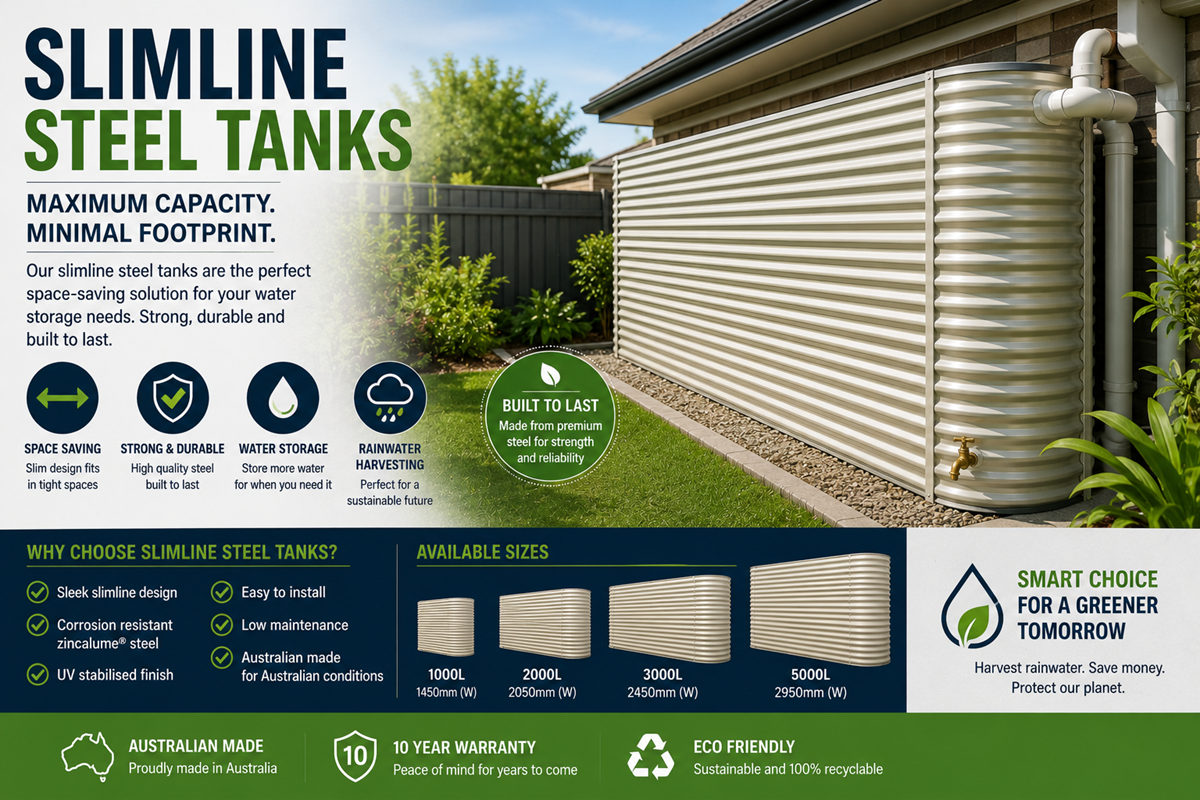
Slimline steel tanks are specifically designed for tight spaces. With widths starting from just 550mm, these tanks slide into narrow side passages, sit against boundary fences, or tuck behind garages. This clever design means you don’t sacrifice outdoor living space for water storage.
Many Australian homes have unused areas that are perfect for slimline steel tanks. That awkward strip along the fence or the dead space beside the shed suddenly becomes valuable real estate for water harvesting.
Ideal Solutions for Urban and Suburban Homes
In suburban areas where blocks are getting smaller, slimline steel tanks offer a practical solution. They can be positioned to complement your home’s architecture rather than dominate your backyard. Available in various colours, these tanks blend seamlessly with most property styles.
Multiple slimline steel tanks can also be linked together, increasing your total storage capacity while maintaining that sleek, unobtrusive profile. This modular approach gives you flexibility as your needs change.
Installation Considerations for Slimline Steel Tanks
Site Preparation and Base Requirements
Proper installation starts with a level, stable base. Concrete slabs or compacted crusher dust provide ideal foundations. The base should extend slightly beyond the tank footprint and be perfectly level to prevent stress on the tank structure.
Consider access for delivery and ongoing maintenance. While slimline steel tanks fit narrow spaces, you’ll need sufficient access for installation equipment and future cleaning or repairs.
Connecting Your Tank to Gutters and Downpipes
Connecting your tank to your roof’s gutter system requires quality first-flush diverters and leaf guards. These components direct the initial dirty rainwater away from your tank and prevent debris from entering your storage.
Professional installation ensures all connections are watertight and properly positioned. Overflow pipes should direct excess water away from your home’s foundations to prevent potential water damage.
Can You Drink Rainwater from a Slimline Steel Tanks?
Water Quality and Filtration Options
Rainwater from a well-maintained steel tank is generally safe for drinking, though filtration and treatment are recommended. Multi-stage filtration systems remove sediment, bacteria, and potential contaminants, providing water quality that rivals or exceeds mains supply.
UV sterilisation offers chemical-free disinfection, killing harmful microorganisms without affecting taste. Combined with sediment and carbon filters, these systems deliver clean, fresh-tasting drinking water.
Making Rainwater Safe for Household Use
Regular tank maintenance is essential for potable water use. Keep your roof and gutters clean, maintain first-flush diverters, and test water quality periodically. Avoid using water from tanks shortly after bushfires when ash contamination is likely.
Professional water quality testing provides peace of mind and identifies any issues requiring attention. Many homeowners find their filtered rainwater tastes better than chlorinated mains water.
Choosing the Best Slimline Steel Tanks for Your Needs
Key Features to Look For
Prioritise tanks with quality steel and proven coating systems. Look for warranties of at least 20 years and check what’s actually covered. Features like mosquito-proof screens, quality brass fittings, and reinforced inlet connections indicate attention to detail.
Consider the manufacturer’s reputation and after-sales support. Australian-made tanks often offer better quality assurance and easier access to replacement parts or warranty claims.
Investing in Quality Rainwater Harvesting
Choosing a slimline steel tanks for rainwater harvesting represents a smart investment in your property’s future. These durable, space-efficient tanks deliver decades of reliable service while reducing your environmental footprint and water costs.
Now’s the perfect time to take control of your water supply. Whether you’re motivated by savings, sustainability, or simply making the most of Australia’s precious rainfall, a quality steel tanks delivers on all fronts. Take that first step today your future self will thank you for it.