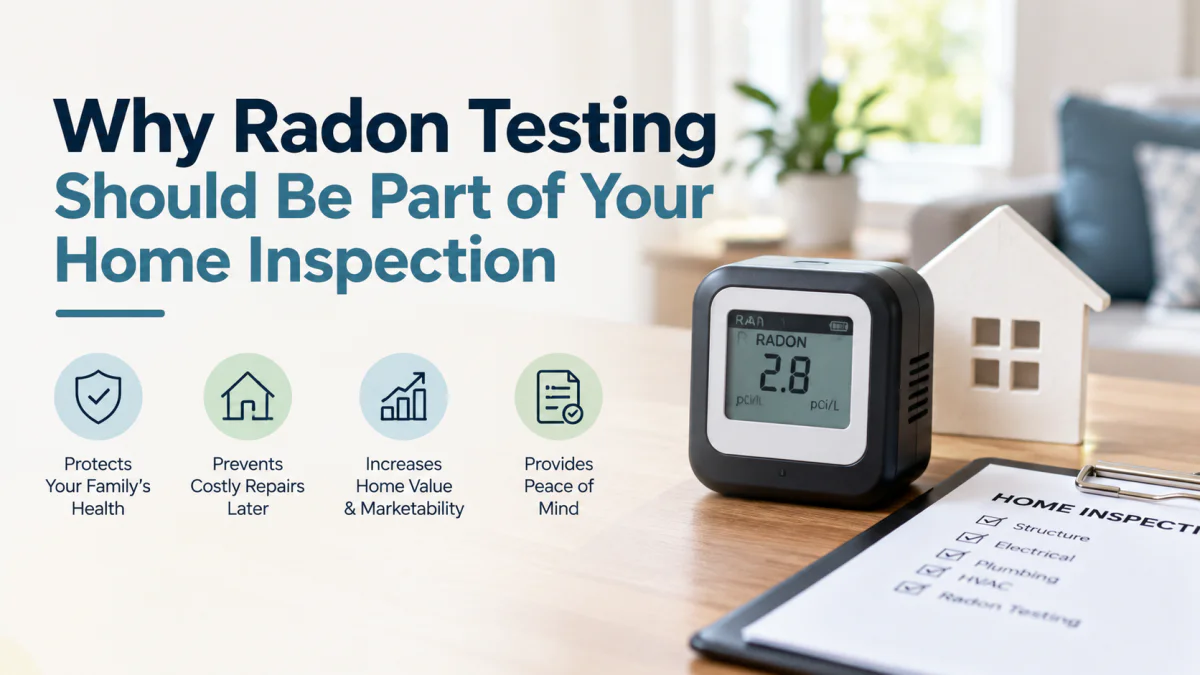
Buying a home involves more than checking the roof, inspecting the plumbing, and looking for visible structural damage. Some potential problems cannot be identified through a simple visual inspection, including the presence of radon gas.
Radon is a naturally occurring radioactive gas that can enter buildings from the ground. Because it has no smell, color, or taste, homeowners cannot reliably detect it without proper testing. Elevated radon levels can pose long-term health risks, making testing an important consideration for anyone purchasing a property.
Including radon testing in your home inspection process can help you understand potential indoor air quality concerns before finalizing your purchase. Here is what homebuyers and homeowners should know about radon, the testing process, and the steps to take if elevated levels are found.
What Is Radon and How Does It Enter a Home?
Radon is produced when uranium naturally breaks down in soil, rock, and groundwater. The gas can move through the ground and enter buildings through openings in their foundations.
Common entry points include:
- Cracks in concrete floors and foundation walls
- Gaps around pipes and utility connections
- Construction joints between building materials
- Openings around sump pits and floor drains
- Crawl spaces and other areas in contact with the ground
Once inside, radon can accumulate, particularly in lower levels of a building. Basements and ground-floor rooms are often worth testing, although radon can also be present on higher floors.
Radon levels vary between properties, even within the same neighborhood. A nearby home’s test results cannot reliably predict the radon level in another house. Testing the individual property is the practical way to determine whether elevated concentrations are present.
Why Is Radon Testing Important During a Home Inspection?
A standard home inspection primarily evaluates visible and accessible components, such as the roof, foundation, electrical systems, plumbing, and heating equipment. Although these checks are essential, they do not establish whether indoor air contains elevated radon concentrations.
Radon testing addresses this separate concern.
The U.S. Environmental Protection Agency (EPA) identifies radon as a leading cause of lung cancer among nonsmokers. The risk increases with long-term exposure, and smoking further increases the risk associated with radon exposure.
Testing before purchasing a property can help buyers make informed decisions rather than discovering a potential issue after moving in.
For buyers arranging home inspections services in Chicago , asking about radon testing can be particularly useful when evaluating a property with a basement or other below-ground living space. However, radon can affect homes in many locations, so testing decisions should not depend solely on whether a property has a basement.
What Happens During a Professional Radon Test?
Professional radon testing generally involves placing a testing device in an appropriate location inside the home. Depending on the method used, the device measures radon concentrations over a defined period.
The process typically includes the following steps.
1. Selecting the Testing Location
The testing professional identifies a suitable area, usually the lowest level that is regularly occupied or could reasonably be used as living space. The device should be positioned according to the applicable testing protocol.
2. Measuring Radon Concentrations
Testing may use short-term or long-term methods. Short-term tests commonly run for a few days, while long-term tests measure concentrations over several months.
The appropriate method depends on the purpose of testing, the property’s circumstances, and relevant guidance.
3. Following Testing Conditions
During a short-term test, certain conditions may need to be maintained to produce meaningful results. These can include keeping windows and exterior doors closed except for normal entry and exit, depending on the testing protocol.
Follow the testing professional’s instructions rather than changing ventilation or operating conditions independently.
4. Reviewing the Results
Once testing is complete, the results indicate the measured radon concentration during the testing period. The professional can explain what the result means and whether additional testing or mitigation should be considered.
A single test provides useful information, but radon concentrations can fluctuate with weather, ventilation, and seasonal conditions.
Short-Term vs. Long-Term Radon Testing
Both testing methods have a role in assessing radon exposure, but they serve slightly different purposes.
Short-term testing provides an initial indication of radon concentrations over a relatively brief period. It can be useful during a real estate transaction when buyers need information within a limited timeframe.
Long-term testing measures radon over an extended period, helping account for fluctuations and providing a better picture of average exposure over time.
If a short-term test indicates elevated radon levels, follow the applicable local guidance on confirmation testing and mitigation. In the United States, the EPA recommends taking action to fix a home when the radon level is at or above 4 picocuries per liter (pCi/L). The EPA also advises considering mitigation for results between 2 and 4 pCi/L.
These are U.S. EPA action guidelines, not universal thresholds for every country. Buyers should consult the relevant local authority for applicable recommendations.
What Should You Do If Radon Levels Are High?
An elevated result does not necessarily mean you must abandon a home purchase. It means the finding should be evaluated and addressed appropriately.
Consider these steps:
Review the test report. Confirm the testing method, duration, measurement location, and reported concentration.
Arrange follow-up testing if needed. Depending on the initial result and local guidance, a second test may help confirm the finding or establish average concentrations.
Consult a qualified radon professional. A specialist can assess the property and recommend an appropriate mitigation approach.
Discuss the findings before closing. Buyers can discuss responsibility for mitigation, costs, and any required work with the seller and their real estate professionals. The terms will depend on the purchase agreement and local requirements.
Verify the results after mitigation. Once a radon reduction system has been installed, conduct a follow-up test to determine whether it is working effectively.
Radon mitigation often involves a system that draws radon from beneath the building and vents it safely outdoors. The appropriate solution depends on the home’s construction and the way radon is entering the property.
Can a Regular Home Inspection Detect Radon?
A standard visual home inspection cannot determine radon concentrations simply by examining the property. An inspector might identify foundation cracks or other openings that could provide potential entry routes, but these observations cannot establish whether radon is present at elevated levels.
Radon testing requires a suitable measurement method and testing device. Some home inspection companies offer this as an additional service, while others refer clients to a qualified specialist.
When booking an inspection, confirm whether radon testing is included, what method will be used, how long it will take, and whether the report will provide guidance on interpreting the results.
It is also worth remembering that a home can have low radon levels despite visible foundation cracks, or elevated levels without obvious structural defects. The only reliable way to determine the concentration is to test.
A home inspection helps buyers understand the condition of a property’s visible and accessible components, but indoor air quality deserves attention too. Radon is particularly important because it cannot be detected through smell or sight, and prolonged exposure to elevated levels can increase the risk of lung cancer.
Adding radon testing to the inspection process provides another piece of information to consider before making a significant financial commitment. If elevated concentrations are found, follow-up testing and appropriate mitigation can help address the concern.
Before scheduling your inspection, ask whether radon testing is available and how the results will be reported. Taking this step can help you make a more informed decision and plan for a healthier indoor environment.