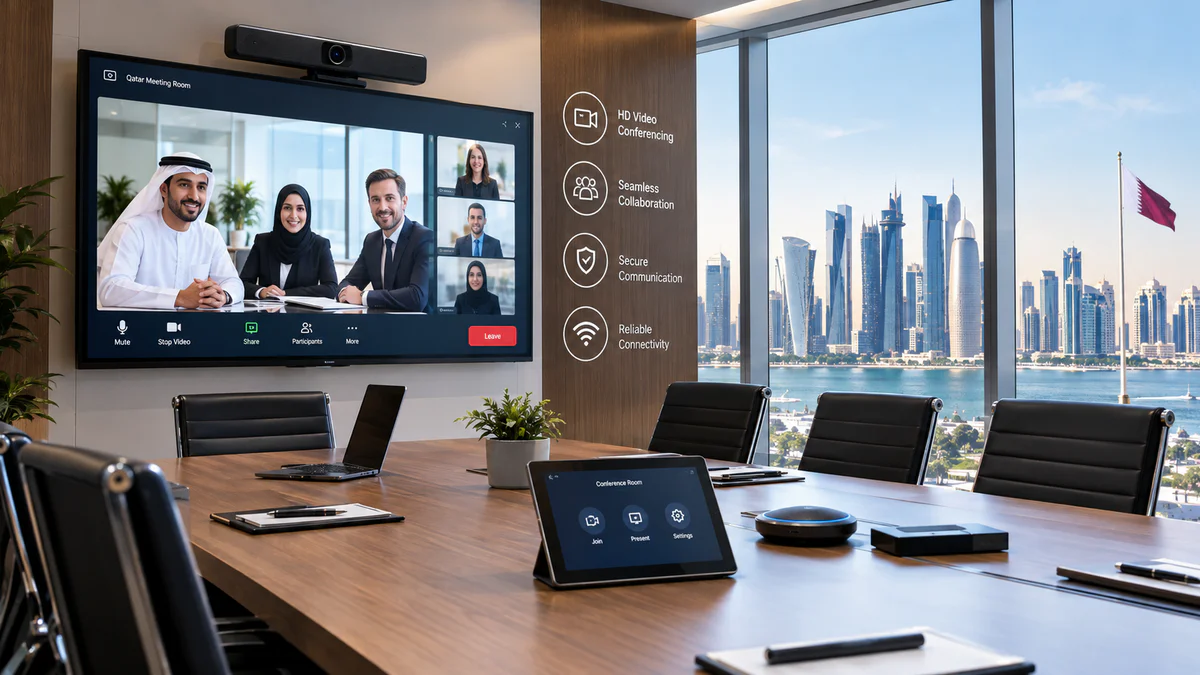
A company moves into a newly renovated office, proud of the sleek meeting rooms and modern furniture, only to discover within the first week that the conferencing equipment installed doesn’t actually support the way the team needs to work no reliable way to connect a laptop wirelessly, audio that barely reaches the far end of the table, and a video setup that makes remote colleagues look like they’re calling in from a different decade. It’s a frustrating, common story, and it’s exactly why choosing the right Conference Solutions in Qatar has become such a critical decision for businesses building or renovating meeting spaces, rather than an afterthought handled once everything else is already finished.
Meeting rooms have changed dramatically in what they need to deliver. A simple screen and a phone line used to be enough. Today’s meetings routinely mix in-person attendees with remote participants, require instant screen sharing across different devices, and demand audio and video quality that holds up for client calls just as well as internal check-ins.
Why Conference Room Technology Deserves More Attention Than It Usually Gets
Meeting rooms are often one of the last things businesses think carefully about when planning or upgrading office space, treated as a simple furniture and equipment purchase rather than a genuine technology investment. This oversight tends to backfire quickly. Poorly chosen conferencing equipment creates daily friction delayed meeting starts, frustrated employees, and a weaker impression on clients and partners who notice immediately when technology doesn’t work smoothly.
Given how many hours businesses collectively spend in meetings each week, the quality of conference room technology has a real, measurable impact on how efficiently teams actually collaborate.
What a Genuinely Effective Conference Solution Actually Includes
1. Reliable, High-Quality Audio
Audio quality tends to matter more than most people initially assume. A meeting where remote participants can’t hear clearly, or where in-room voices get lost depending on where someone’s sitting, quickly becomes exhausting and unproductive. Modern conferencing systems use multiple microphones and intelligent audio processing to capture clear, consistent sound throughout the room, regardless of where participants happen to be seated.
2. Clear Video That Actually Represents the Room
Video quality needs to go beyond simply having a camera in the room. Intelligent framing that follows whoever’s speaking, adjusts for different room sizes, and provides a genuinely engaging view for remote participants makes a significant difference in how included those remote attendees actually feel during the conversation.
3. Effortless, Wireless Content Sharing
Cables and adapters remain one of the most common sources of meeting delays. Conference solutions that allow instant wireless sharing from laptops, tablets, or phones remove this friction almost entirely, letting anyone present content within seconds rather than fumbling with connections while everyone else waits.
4. Simple, Intuitive Controls
The best conference room technology fades into the background rather than demanding attention. Starting a meeting, adjusting volume, or switching between presenters should require minimal thought or instruction, rather than a laminated instruction sheet taped to the wall that nobody actually reads.
5. Consistency Across Every Room
For businesses with multiple meeting spaces, consistency matters enormously. Employees shouldn’t need to relearn how technology works every time they book a different room. Standardized conference solutions across every space create a predictable, frustration-free experience regardless of which room a meeting happens to be scheduled in.
Choosing the Right Video Conferencing Platform
Hardware is only part of the equation. The software platform tying a room’s audio and video together matters just as much, since it needs to integrate smoothly with whatever communication tools a business already relies on daily. Businesses evaluating Video Conferencing Solutions in Qatar typically prioritize platforms known for stability, ease of use, and strong compatibility across different devices and operating systems, since a platform that works flawlessly for some participants but struggles for others undermines the entire point of investing in better conference technology in the first place.
What Businesses Often Get Wrong When Choosing Conference Solutions
Prioritizing Price Over Reliability
The cheapest conferencing equipment often ends up costing more in the long run, whether through frequent technical issues, poor build quality requiring early replacement, or the accumulated cost of lost productivity from unreliable performance during meetings that matter.
Overlooking Scalability
Businesses sometimes choose conference solutions based purely on their current office size, without considering how those needs might change as the company grows. Systems that can’t scale or integrate easily with additional rooms or locations often require a costly overhaul sooner than expected.
Skipping Proper Installation and Calibration
Even good equipment underperforms significantly if it isn’t installed and calibrated properly for the specific room it’s placed in. Room acoustics, lighting conditions, and layout all affect how well conferencing technology actually performs, making professional installation a meaningful factor in overall system quality.
Ignoring the Employee Experience During Selection
Decisions about conference room technology are sometimes made entirely by IT or facilities teams without genuine input from the employees who’ll actually use these rooms daily. This often results in technically capable systems that don’t quite match how teams actually prefer to run their meetings.
The Business Payoff of Getting This Right
Businesses that invest properly in conference room technology tend to see consistent, compounding benefits. Meetings start on time more often, since technical troubleshooting stops eating into scheduled time. Remote employees feel genuinely included rather than treated as an afterthought bolted onto an in-person meeting. Client-facing meetings leave a stronger, more professional impression. And IT support fields fewer recurring complaints about the same predictable technical issues, freeing that time for more valuable work elsewhere.
Working With the Right Partner
Given how much conference room technology affects daily operations, selecting an experienced provider matters considerably. Businesses should look for partners with a proven track record across different room sizes and configurations, genuine expertise spanning both hardware and software integration, and a commitment to ongoing support rather than disappearing once installation is complete. The right partner takes time to understand how a specific business actually uses its meeting spaces, tailoring the solution to real needs rather than installing a generic package that technically checks the boxes without actually fitting how the team works.
Final Thoughts
Conference room technology has quietly become one of the more consequential decisions businesses make when setting up or upgrading office space, directly shaping how efficiently teams collaborate every single day. Companies that treat this as a genuine strategic investment, rather than a last-minute equipment purchase, consistently see smoother meetings, stronger client impressions, and considerably less daily friction across their organization.
The businesses running the smoothest meetings today aren’t necessarily spending the most on their offices overall. They’re the ones that took conference room technology seriously from the start, building spaces that genuinely support how modern teams need to work and communicate.